The idea of this set of images is to encourage a more holistic approach to analysing images. When I look at radiology, I try to find all the information possible from the image – even down to where the patient may be (normal ward, ICU), and clues as to their presenting complaint.
I recommend doing the same when taking a history – can you see a Medicalert bracelet? Can you see puncture marks on the fingers from regular glucose monitoring? What clinical clues can you find that may aid you in diagnosing or managing the patient?
So the following questions aren’t just the standard “find the pneumonia and say where it is” type – think of it more like squeezing a lemon to get all the juice out of it!
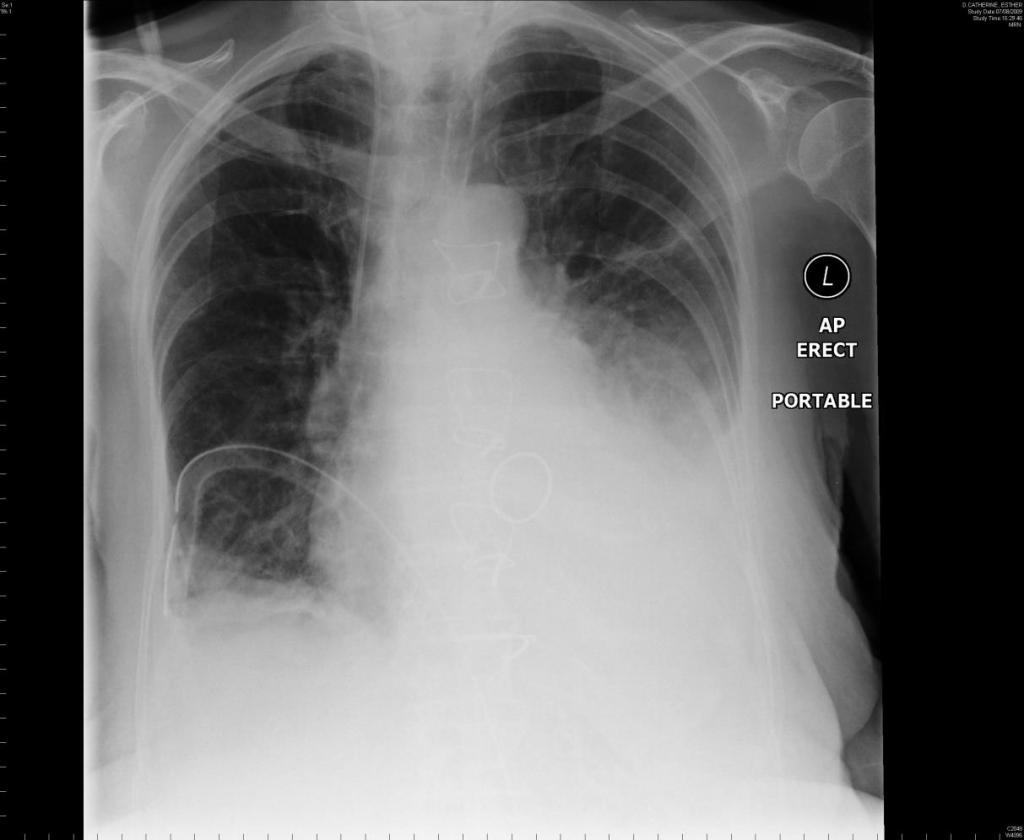
Question 1
Describe the features of this CXR. What information can you glean from it?
Can you guess what this lady came into hospital for based on this CXR?
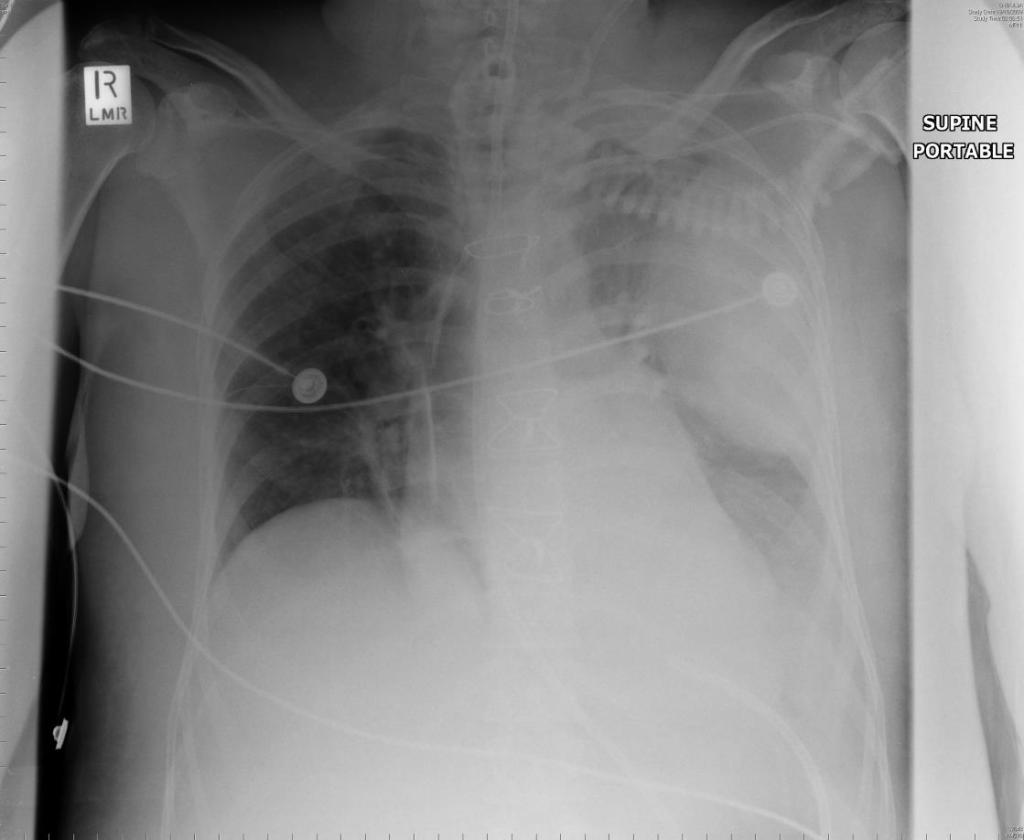
Question 2
Describe the features of this CXR. What information can be extracted from it?
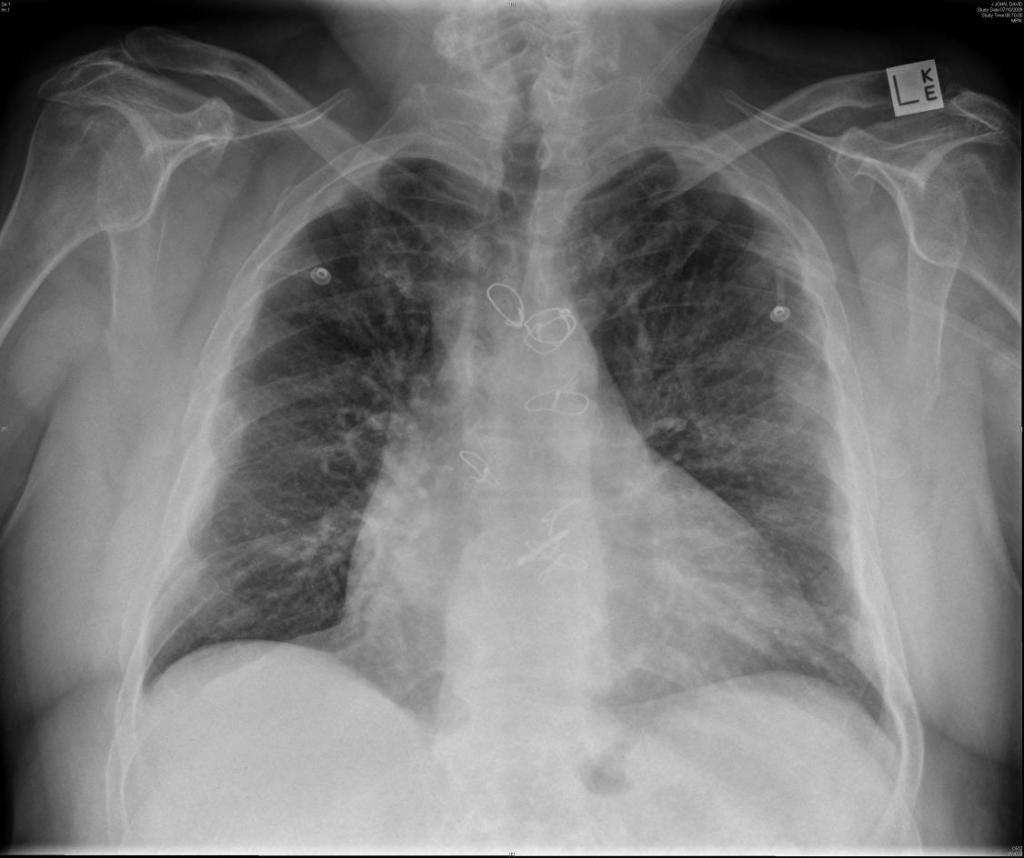
Question 3
What abnormality can be seen on this CXR? What could have caused this?
Question 4
A young male presents with a self-inflicted wound to right anterior chest. Please describe this CXR.
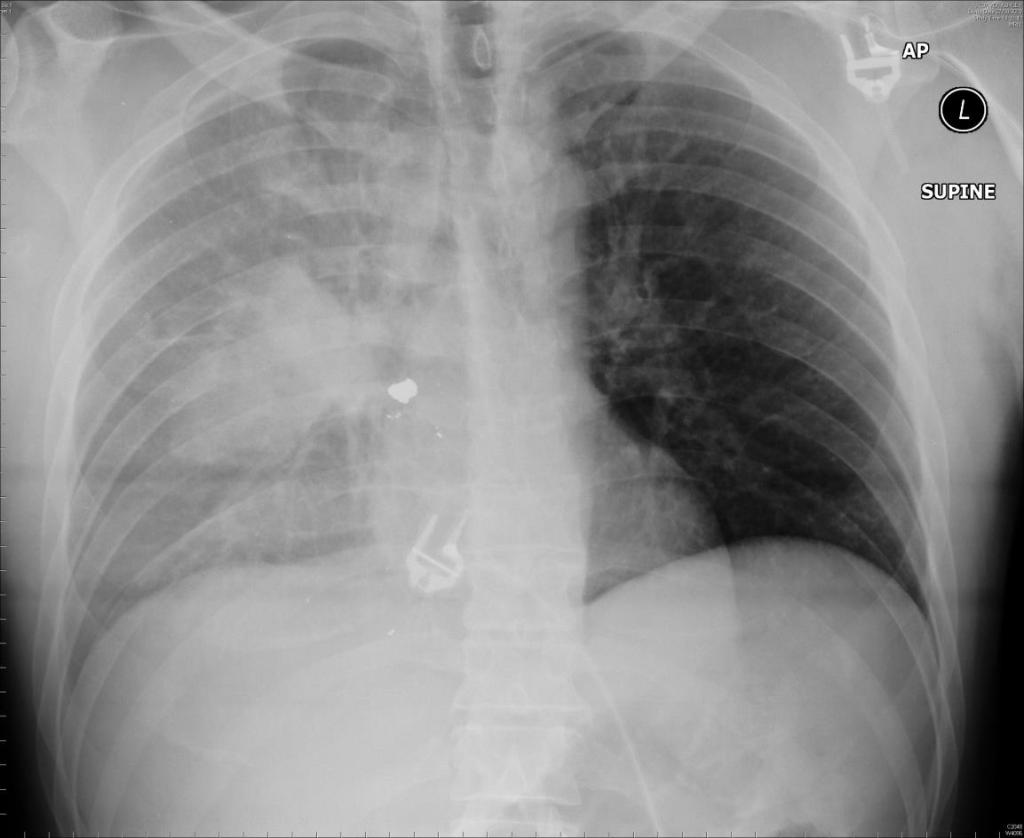
A chest drain is inserted and drains 1.5L of frank blood. Does this patient need thoracotomy?
What else would suggest the need for theatre?
What considerations for theatre would go through your mind? (advanced level)
Question 5
Please describe this CXR.
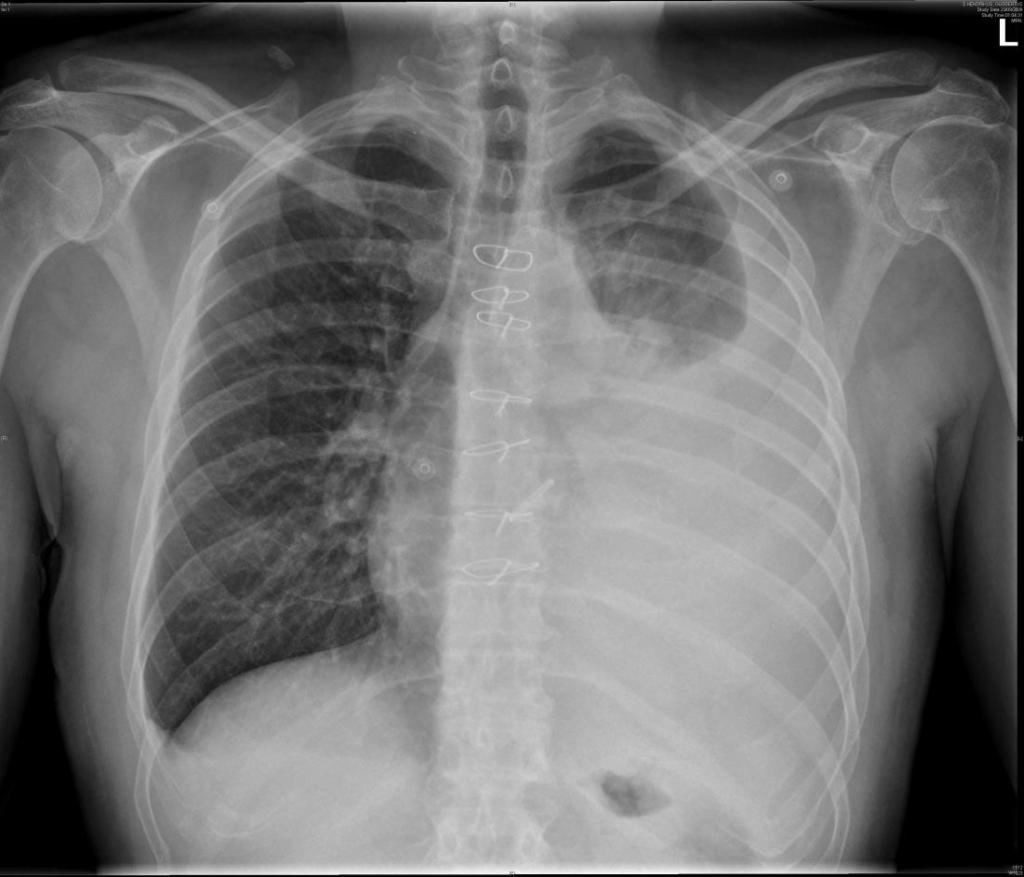
What are the causes of pleural effusion?
What clinical signs or symptoms would suggest a pleural effusion needs draining acutely?
Describe this CXR of the same patient a day later.
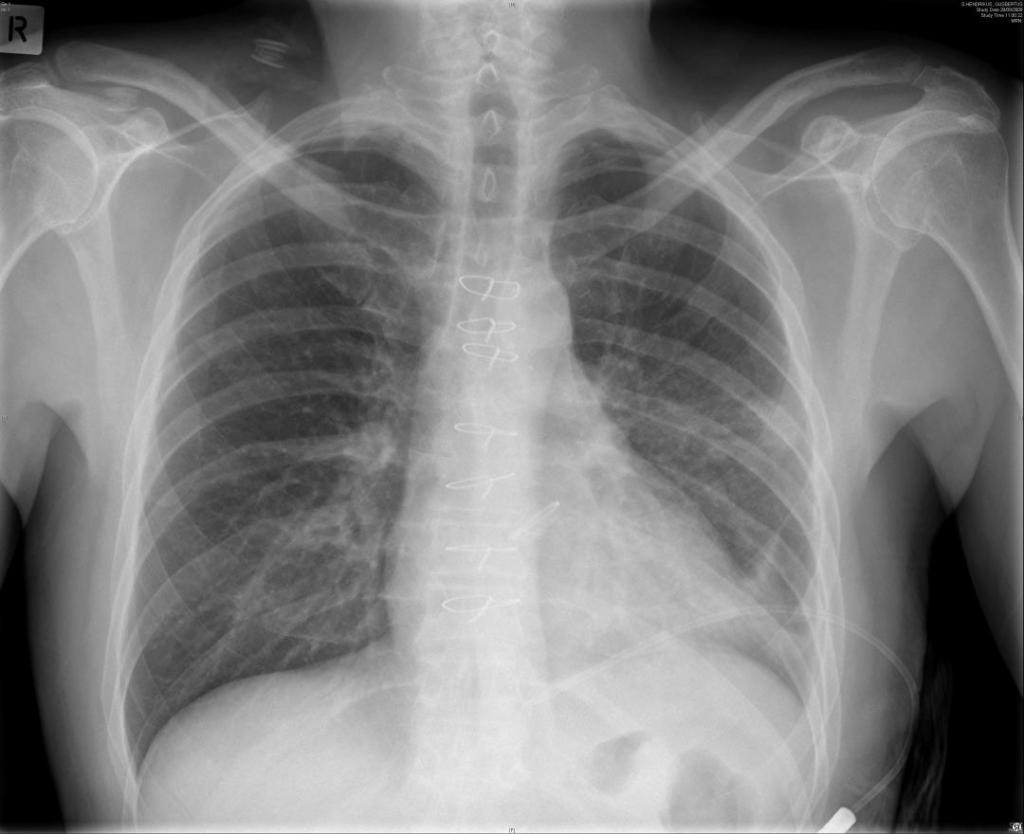
Question 6
57 yo female presents increasing shortness of breath on exertion, dry cough, and decreased exercise tolerance. Please describe this CXR. Can you glean any information about the patient from it?
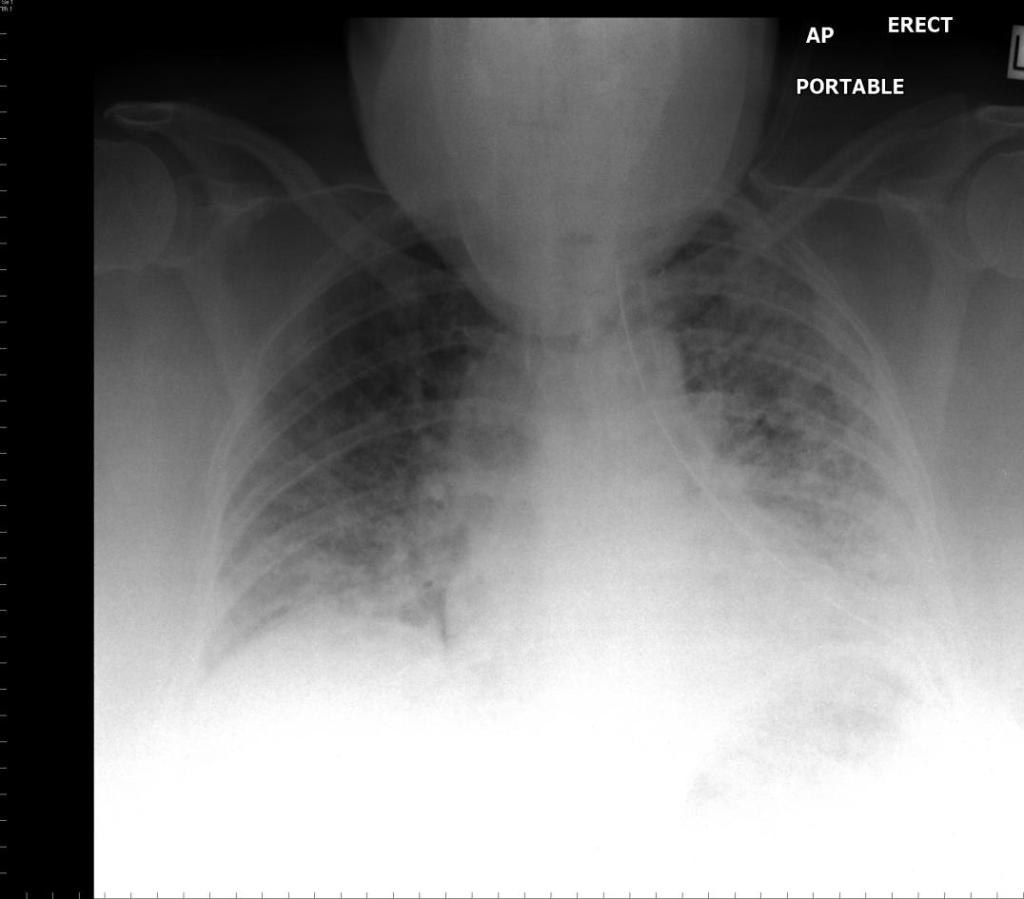
What are some causes of pulmonary fibrosis?
Question 7
50 yo male from a nursing home presents with sudden onset of abdominal pain, distension, and obstipation. History of chronic constipation and frequent use of enemas.
Examination: tachycardia, hypotensive, dehydrated, resonant abdomen, abdomen tender but not peritonitic, tinkling bowel sounds.
Basic bloods (FBE, EUC, CRP) showed a mild leucocytosis (WCC 13). What other bloods would you consider doing and why?
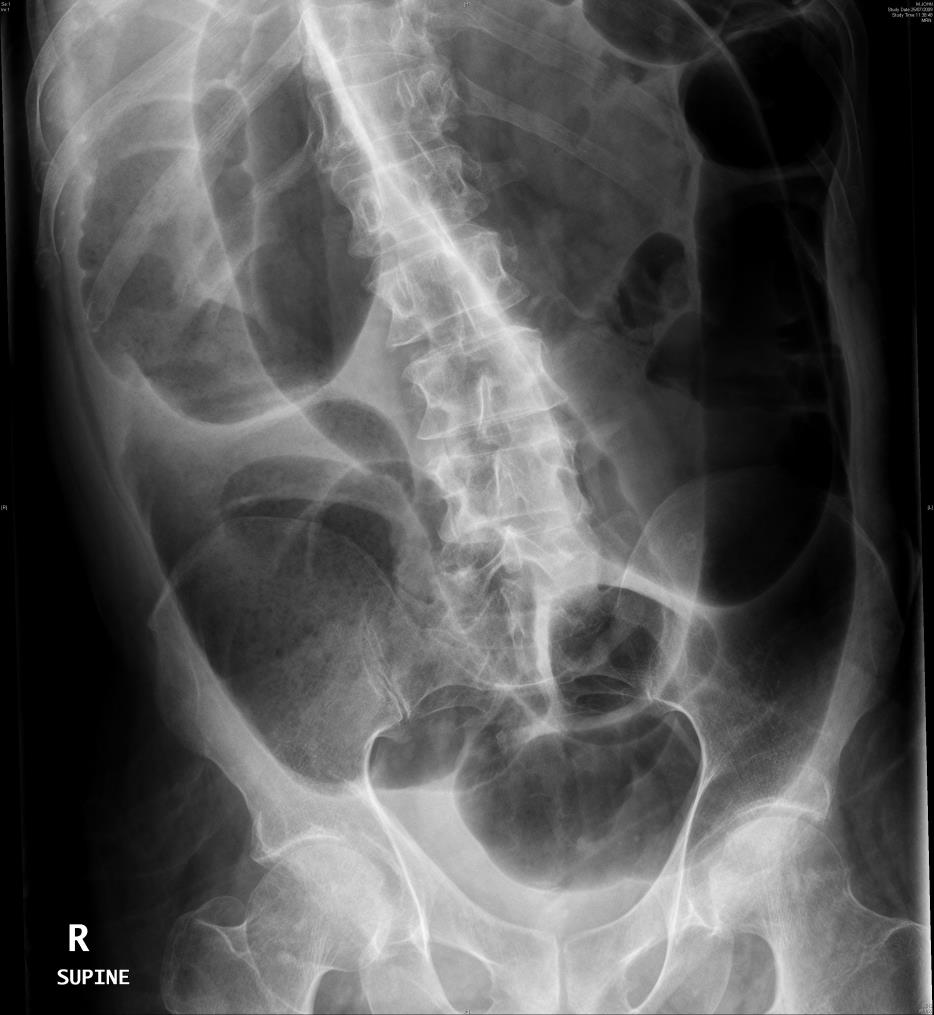
What does the AXR show? What differential diagnoses would you consider?
What is the immediate management of this condition?
What is the long-term management?
Bonus question: what are the normal diameters of the adult bowel on xray – small bowel, large bowel, caecum?
Question 8
62 yo male struck by a car that mounted the curb at low speed. No LOC, did not strike head, mobilised to the ambulance, mobilised into ED. GCS 15/15.
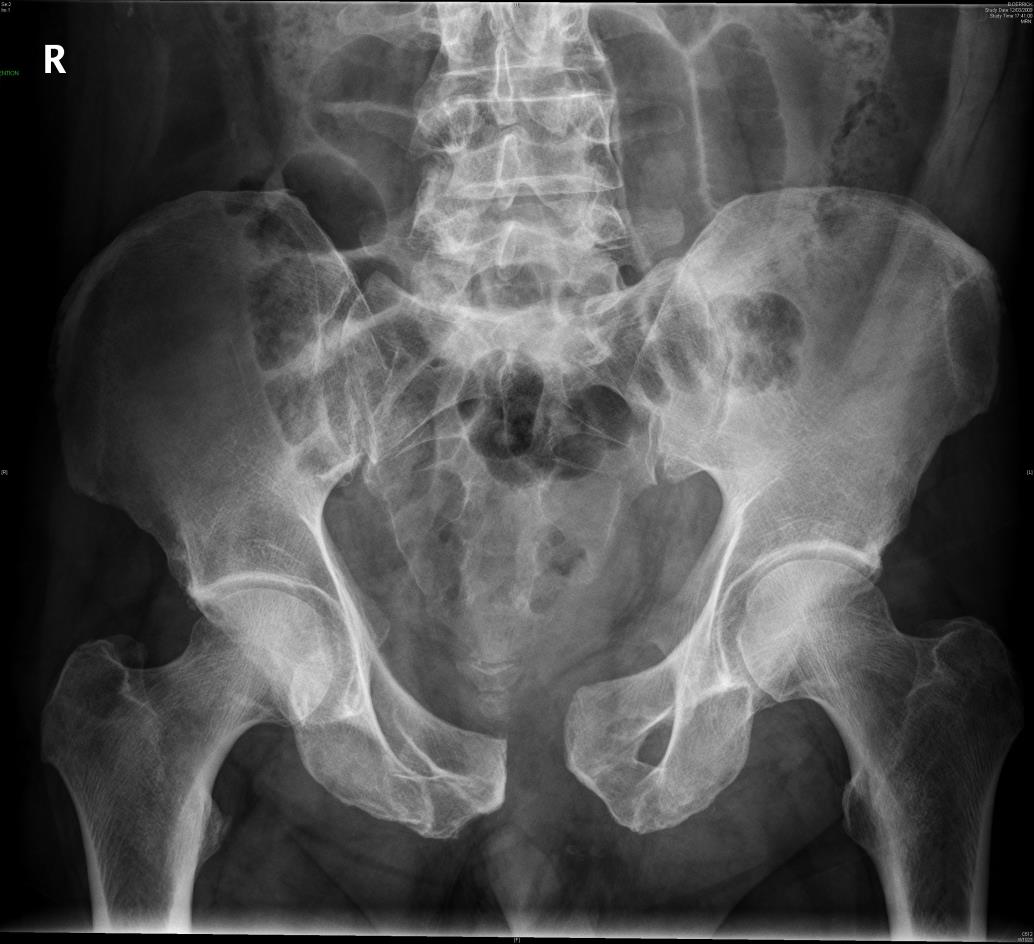
What does his XR show?
What complications are you concerned about with this injury?
How would you manage this patient?
Question 9
Elderly male presented with dyspnoea for investigation. Recent weight loss, malaise, fevers at night. Smoking history.
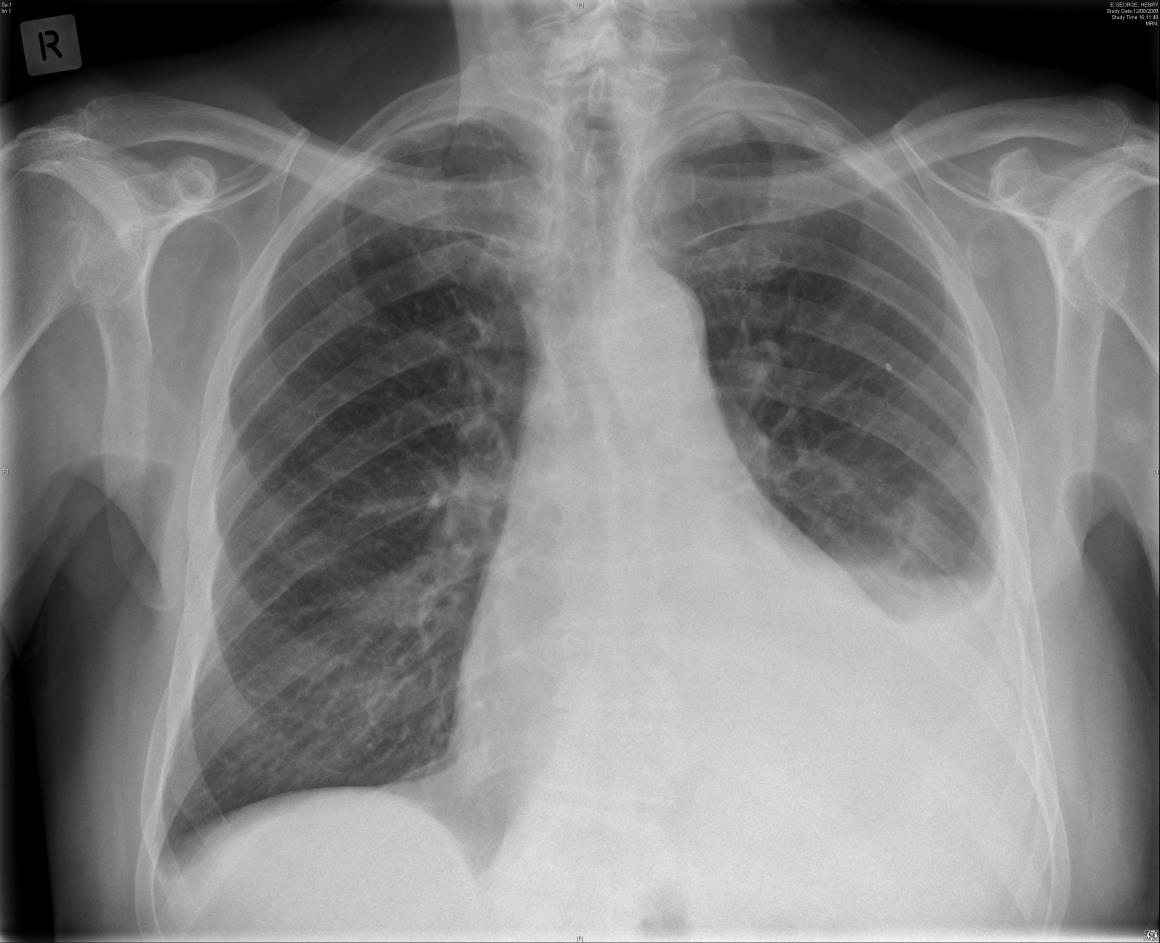
What is the abnormality on this CXR?
What are the causes of a pleural effusion?
What blood tests would you order, and why?
Blood tests showed:
Hb 150
WCC 9.2
CRP 11
What do these blood tests indicate?
Question 10
78 yo female was standing in the garden waving goodbye to a friend after a visit when the friend accidentally reversed the car into her, knocking her over, running her over and avulsing her eyeball.
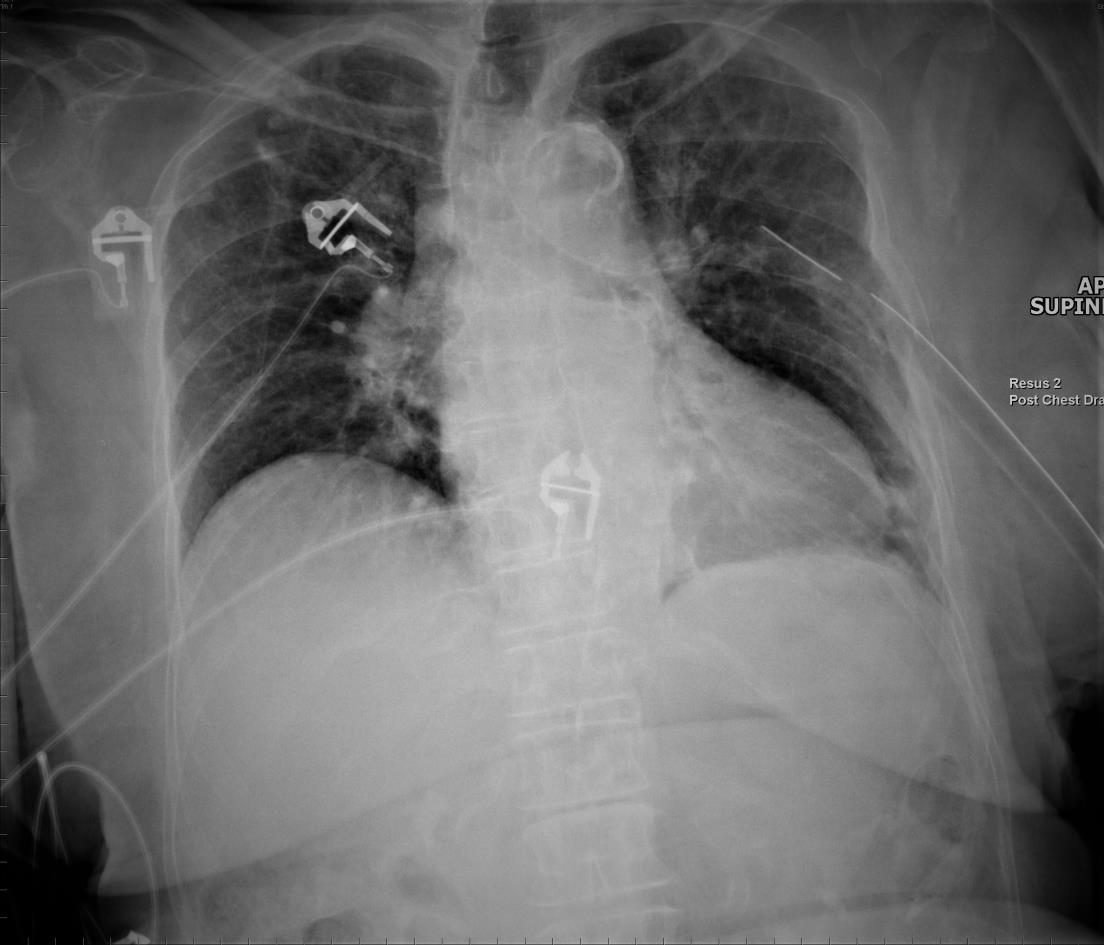
What are the complications associated with this injury?
Generally speaking, when should a CXR be ordered for low-moderate impact chest injury, and why?
How do you manage simple rib fractures/contusions?
Question 11
Elderly female admitted for elective CABG. Post op CXR shown: what is the main abnormality?
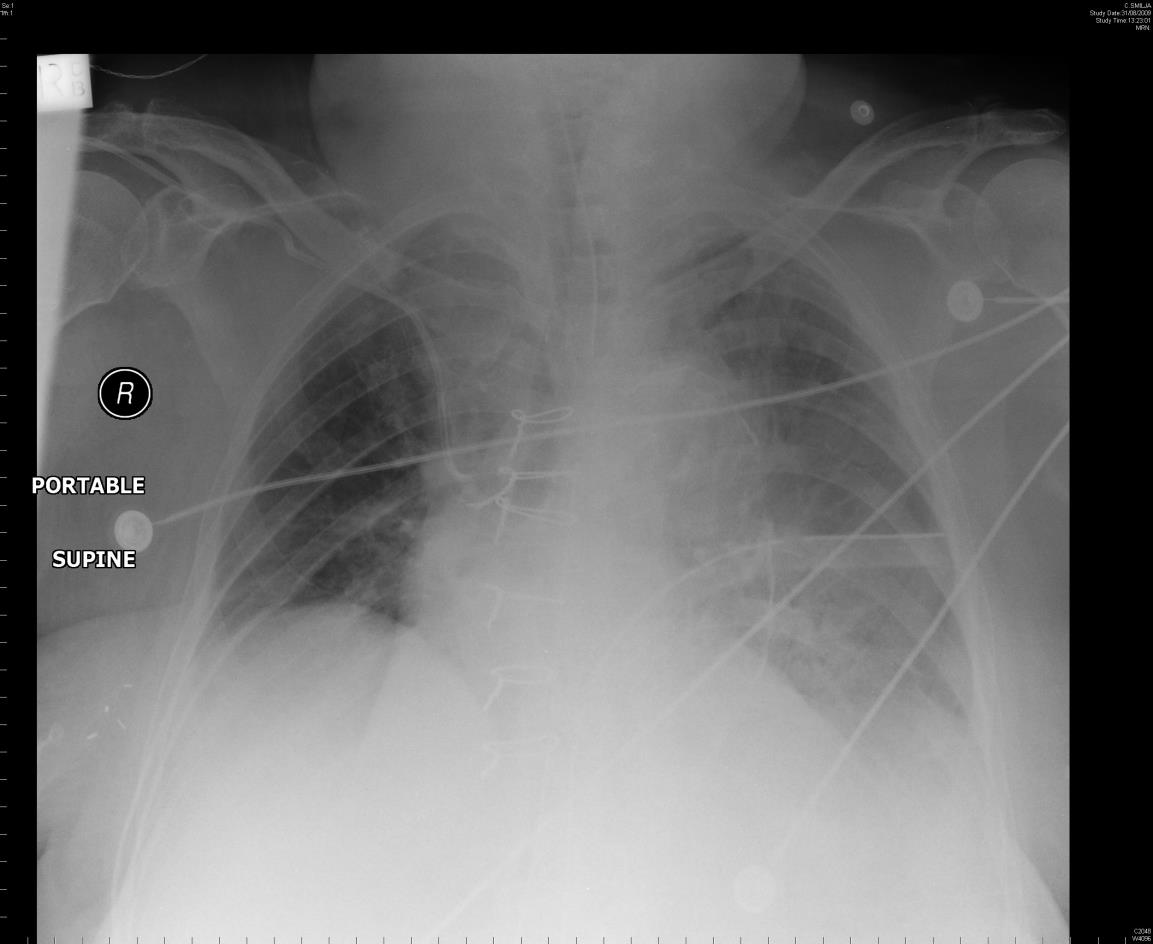
Repeat CXR in clinics at post op visit 6 weeks later:
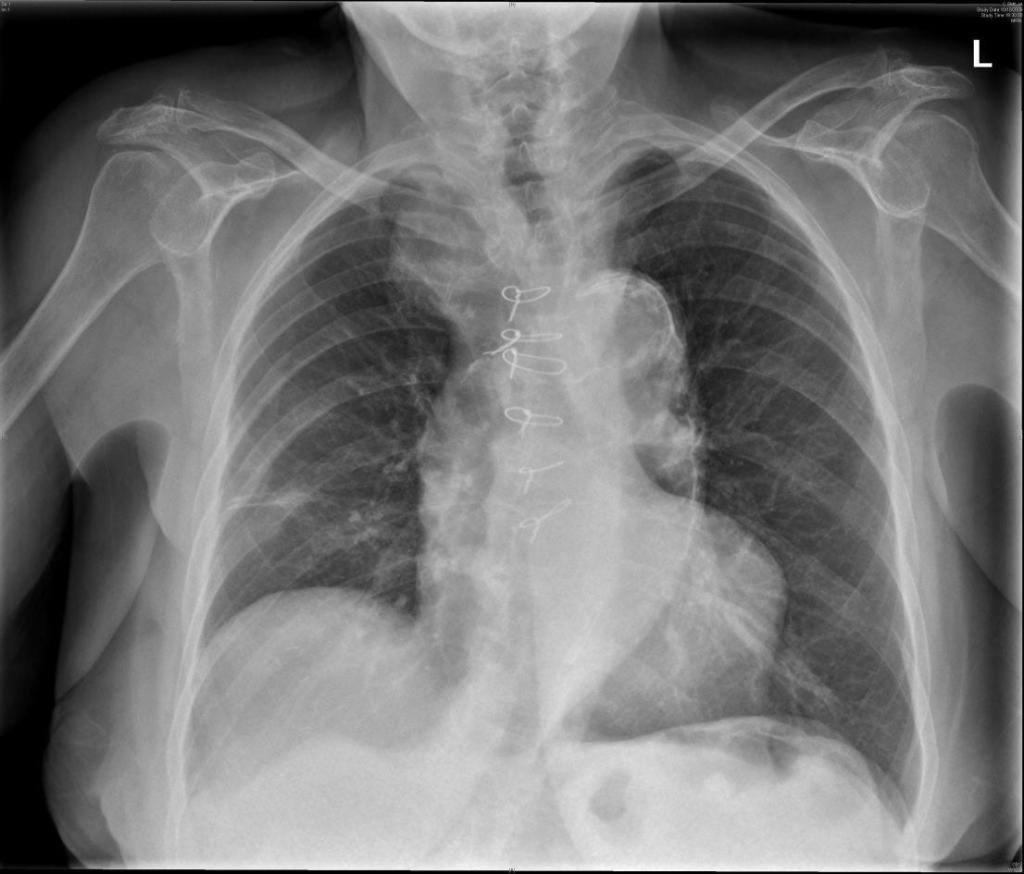
What is the abnormality on this CXR?
What could be the cause of this abnormality?
Bonus points: why are women more prone to autoimmune diseases?
Question 12
What is the abnormality on this CXR (and no, it’s not the watch!)?
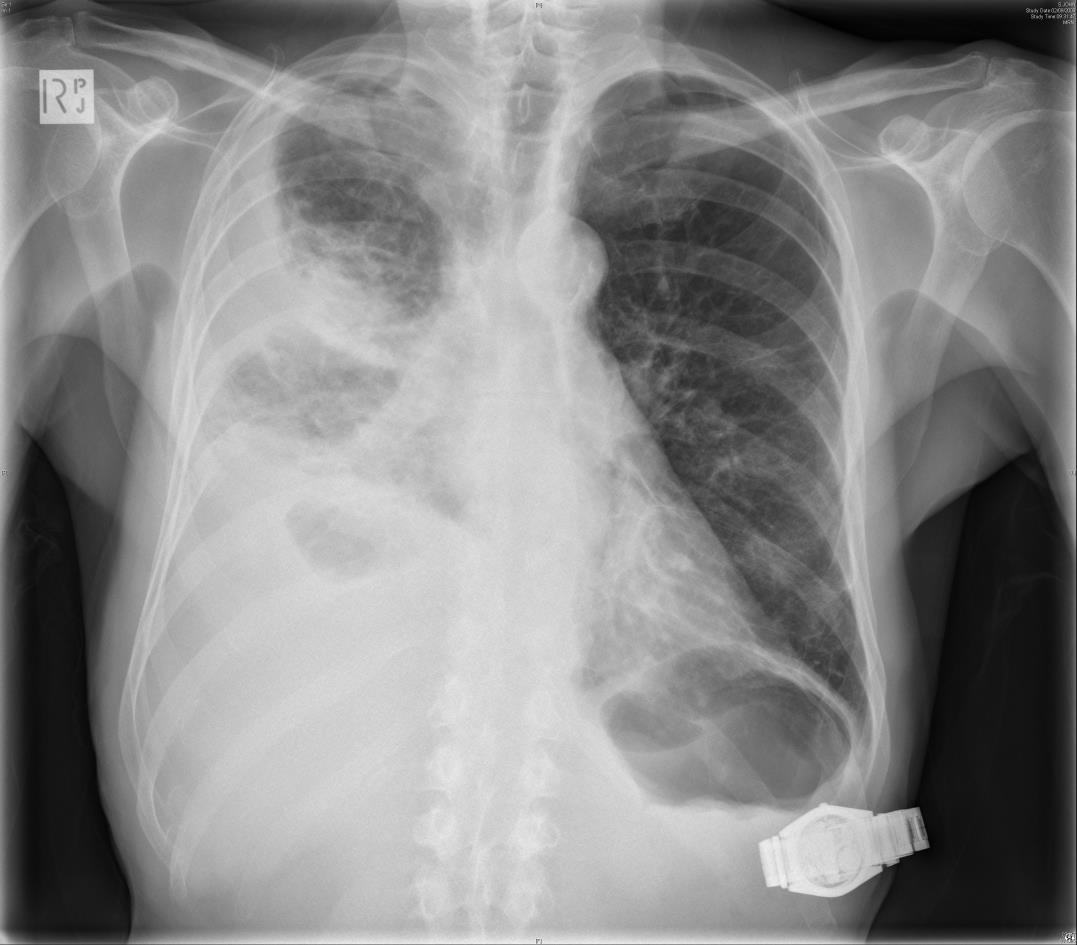
What would be your differential diagnoses? What key history are you going to cover?
Question 13
74 yo female involved in MVA. Presented with painful left shoulder girdle and dyspnoea. HR 110, BP 160/100, saturations 98% RA.
What is the abnormality on this CXR?
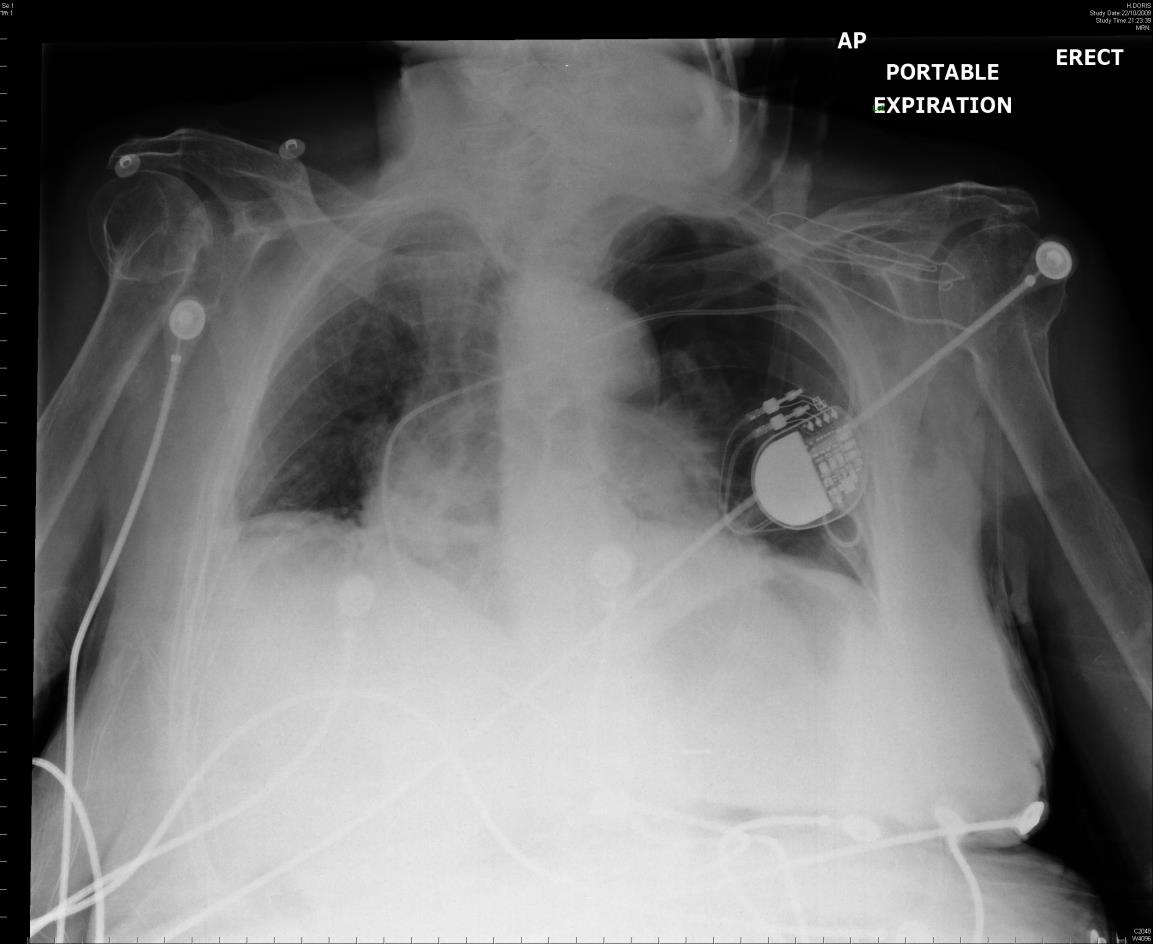
What is the management for a pneumothorax?
Should you give supplemental oxygen if her saturations are 98%? If so, why?
Question 14
65 yo male presents with the following CXR. What is the abnormality?
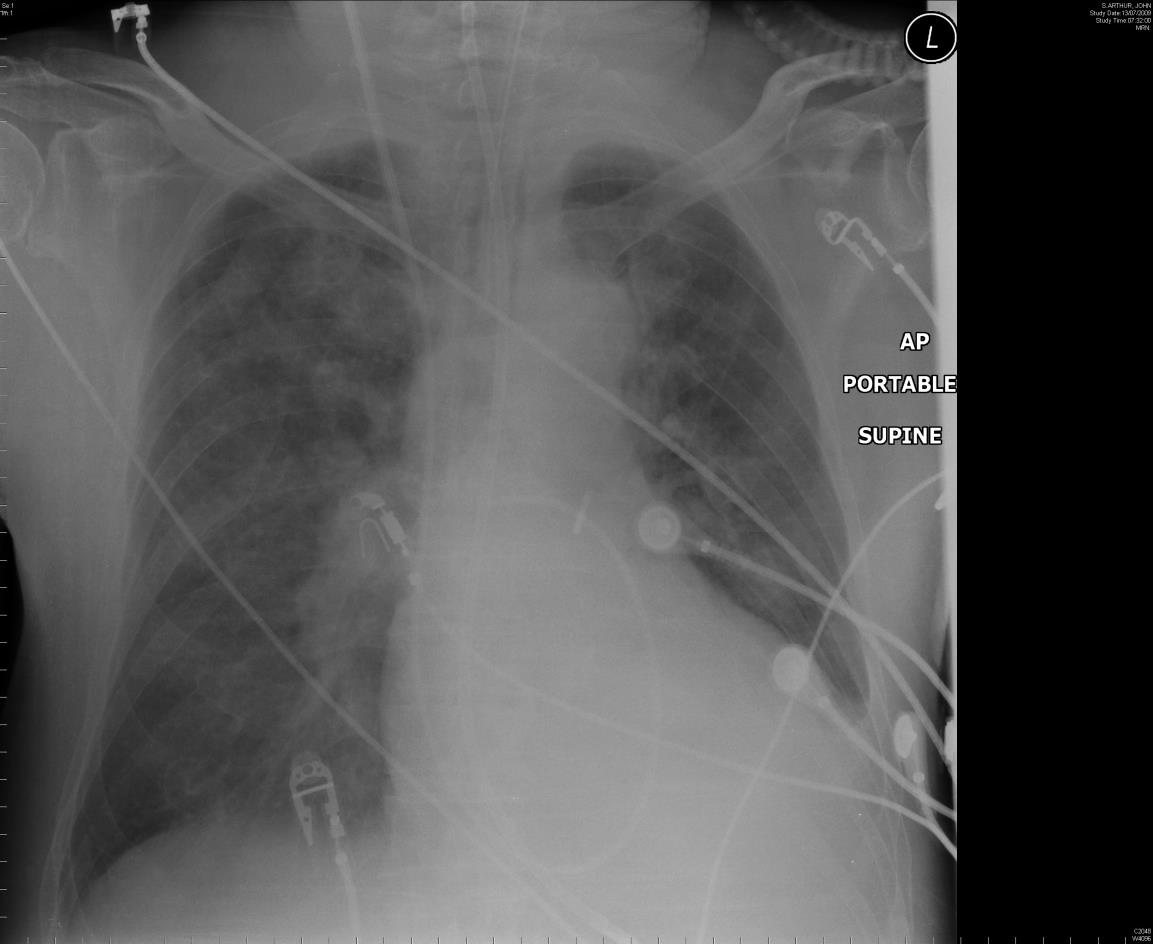
This man had recurrent pneumothorax secondary to lymphoid granulomatosis. The following CXR shows the management of his problem:
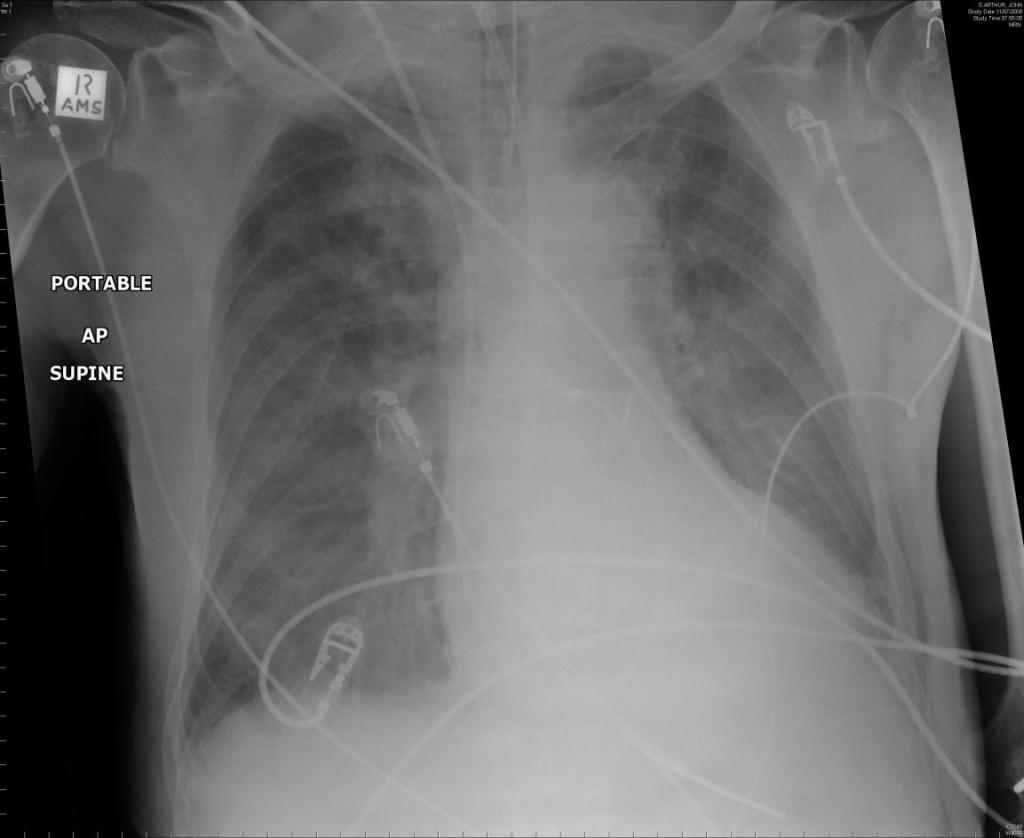
VAT (video assisted thoracoscopy) and pleurodesis
Pearl: abnormal is not always abnormal. Sometimes we cause it deliberately!
Question 15
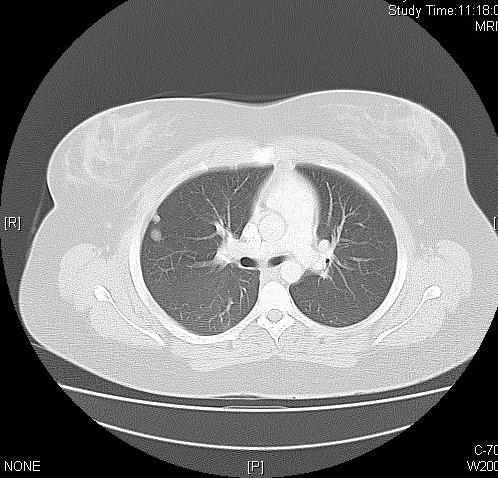
19 yo female presents with ongoing shortness of breath, which has been an intermittent problem for two years. CT chest is shown: are there abnormalities? Can you suggest causes of these?
Question 16
CXR 1 – 43 yo Aboriginal male presented with SOB on a background of smoking, DM2, HTN, high cholesterol, and AF. What is abnormal here?
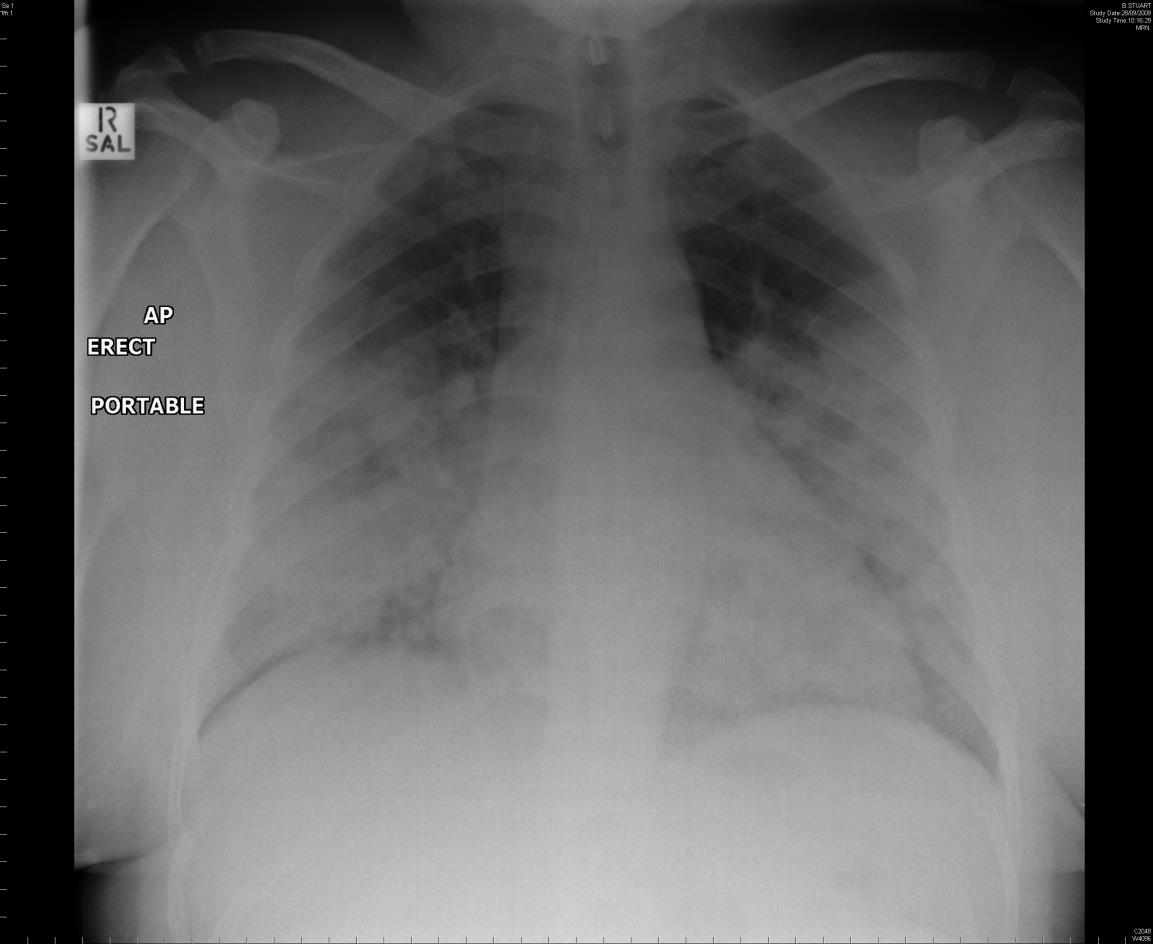
How does this CXR differ from pleural effusion?
If this was a patient with history of pneumonia and CHF, what test could you do to differentiate between the two causes?
Repeat CXR was taken 16 days later: by this stage, it was clearly pneumonia with consolidation evident.
Question 17
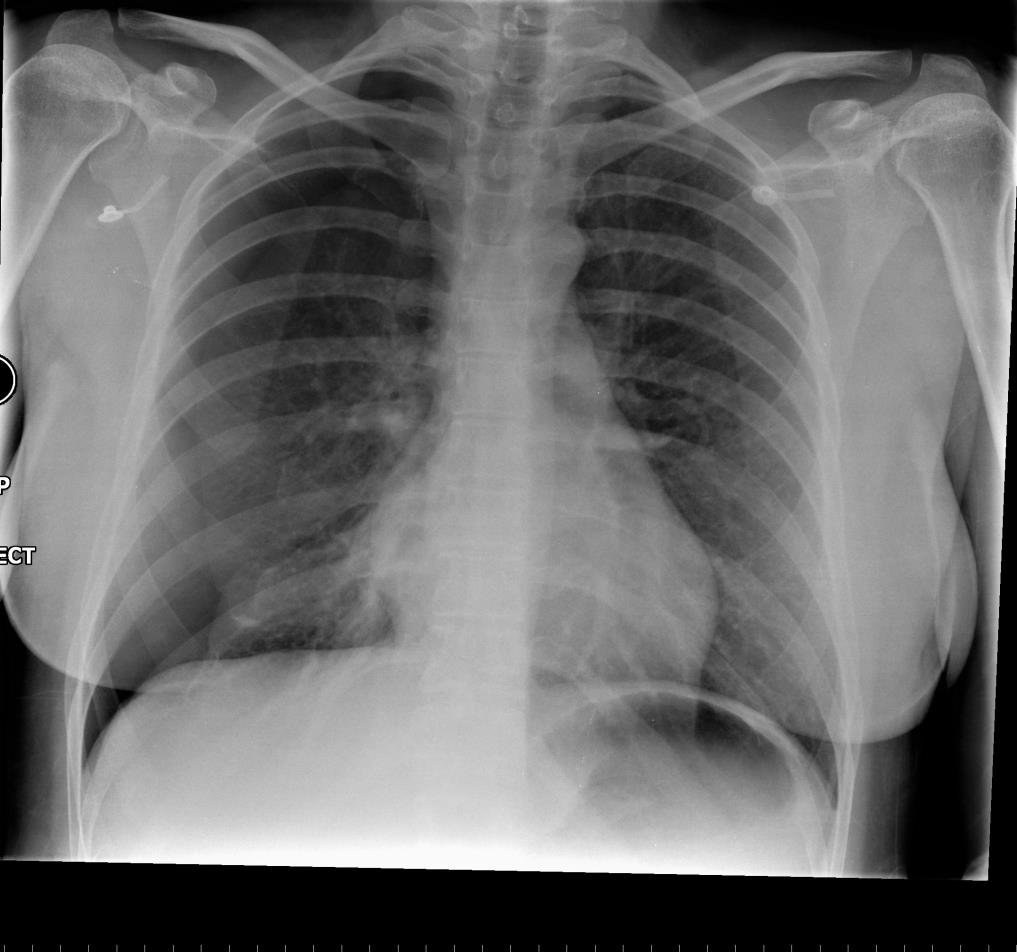
38 yo female deliberately drove her car into tree at 80kph. Brought to ED complaining of sternal pain and dyspnoea. What is the abnormality on this CXR?
Question 18
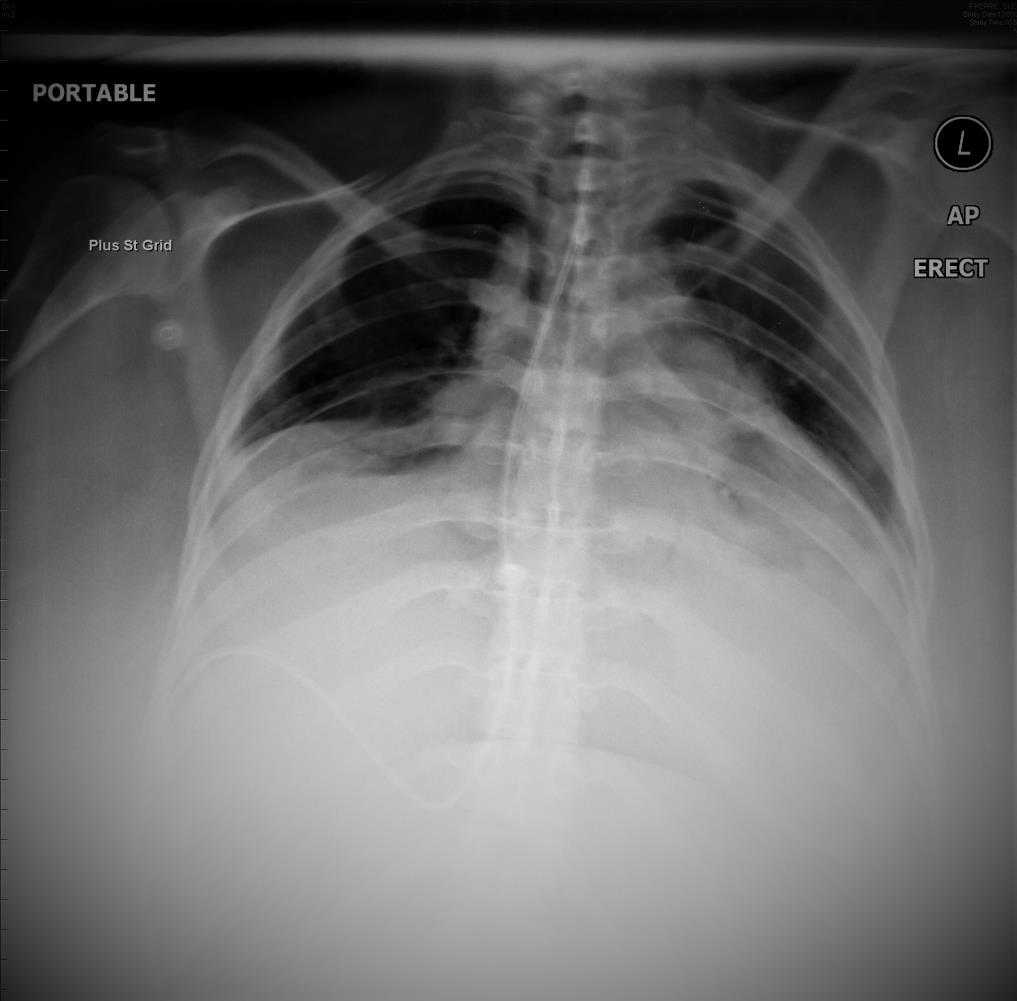
50 yo female presents with a mucosal injury from a chicken bone impacted in the oesophagus for 6 days. A nasogastric was inserted. CXR was ordered to check position of NGT. Can the NGT be used?
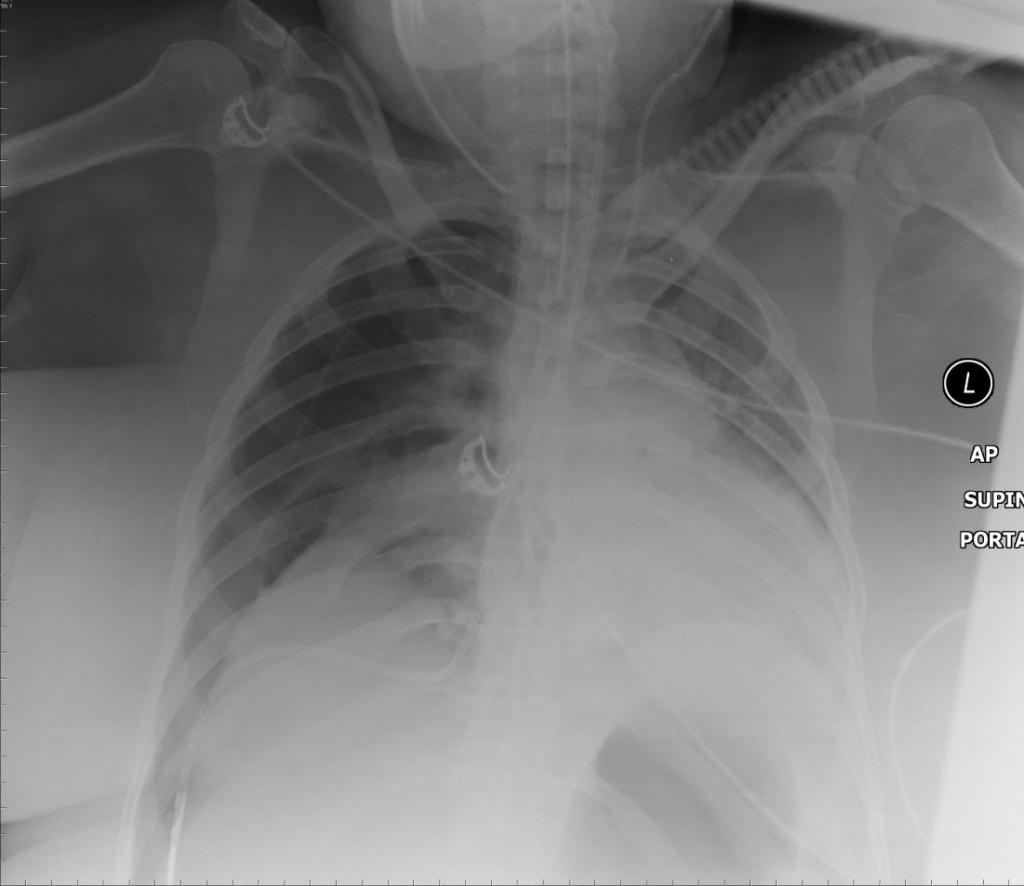
A later CXR was taken after an attempt to reposition the NGT. What is now wrong? Where was the NGT most likely to have been based on this CXR?
Question 19
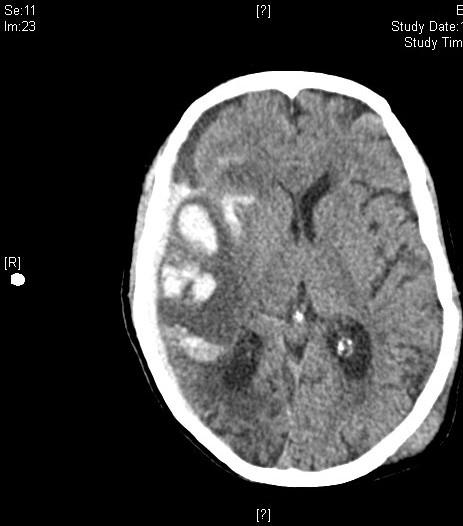
61 yo female presented with headache and syncope after she fell over whilst intoxicated. This is her CT. What is the abnormality?
Question 20
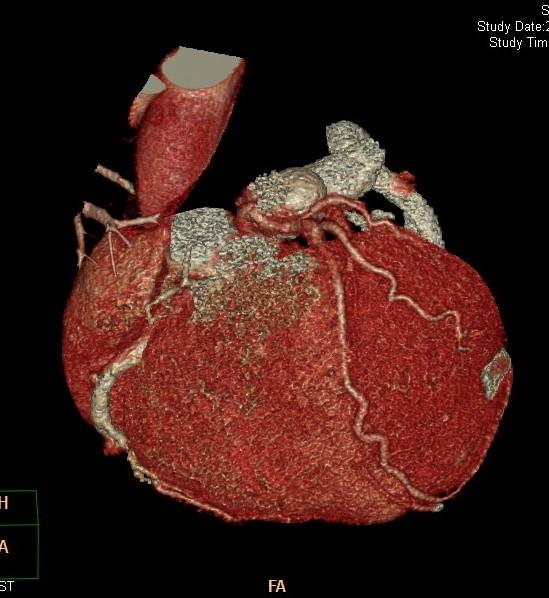
53 yo male noted to have an abnormal coronary artery on elective angiogram. What is the abnormality?
Question 21
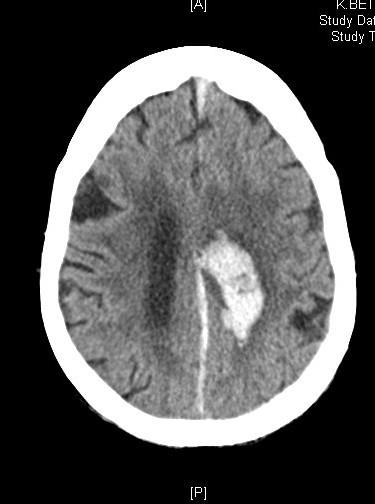
90 yo female presented with decreased GCS and right sided flaccid paralysis. What does the CT show?
Question 22
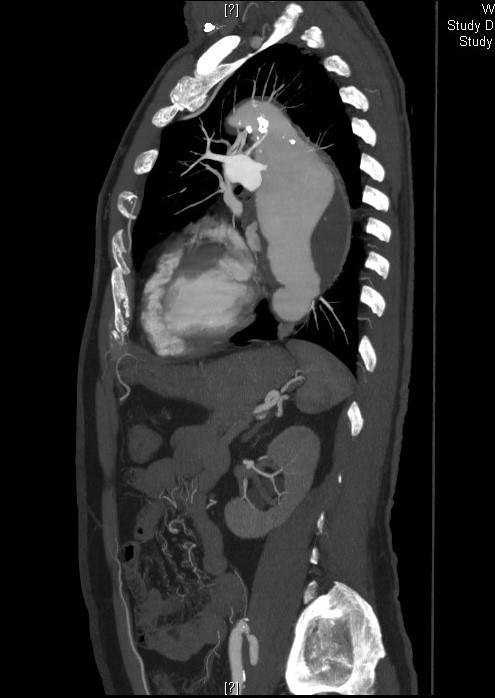
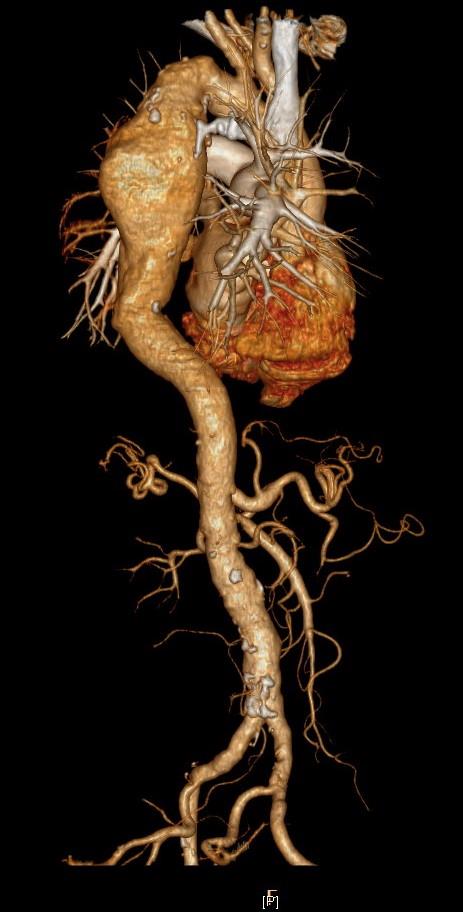
80 yo male presented with chest pain radiating to left chest and back; history of moderate mitral regurgitation. What is the abnormality shown?
Question 23
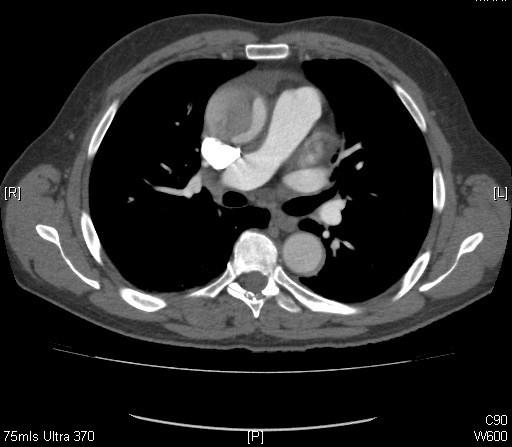
66 yo male presented with chest pain. His troponin and ECG were normal. A D dimer was 4.5. He was therefore sent for CT to exclude PE. What is the abnormality on this CT scan?
Learning points: when should a D dimer be ordered? How is it used?
What sort of complications could you expect from a Type A dissection?
Question 24
84 female involved in MVA. No loss of consciousness, self-extricated. Ten minutes after arrival, she developed dense right sided hemiplegia. A Code STROKE was called. What does the CT show?
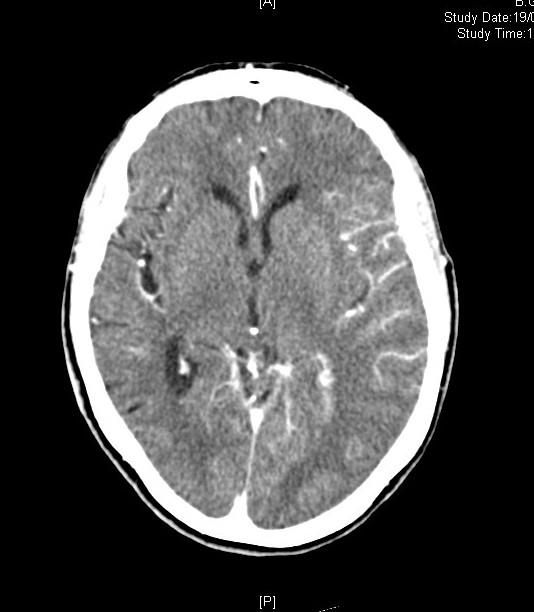
Question 25
Patient presented with a basilar aneurysmal bleed. Three days later, there was nil improvement in physical state, so a repeat CT was performed. What does this show?
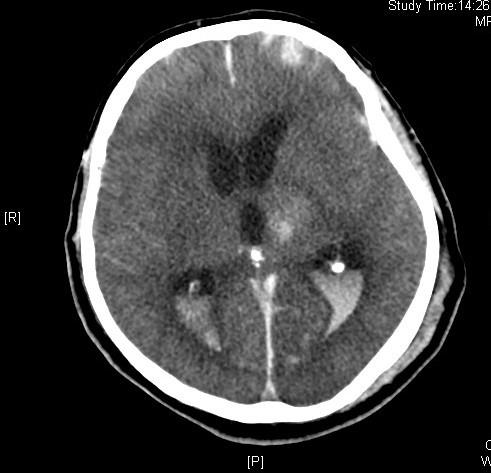
Question 26
Cow vs person. Tender over right chest, dyspnoea. What abnormalities can you see on this CXR?
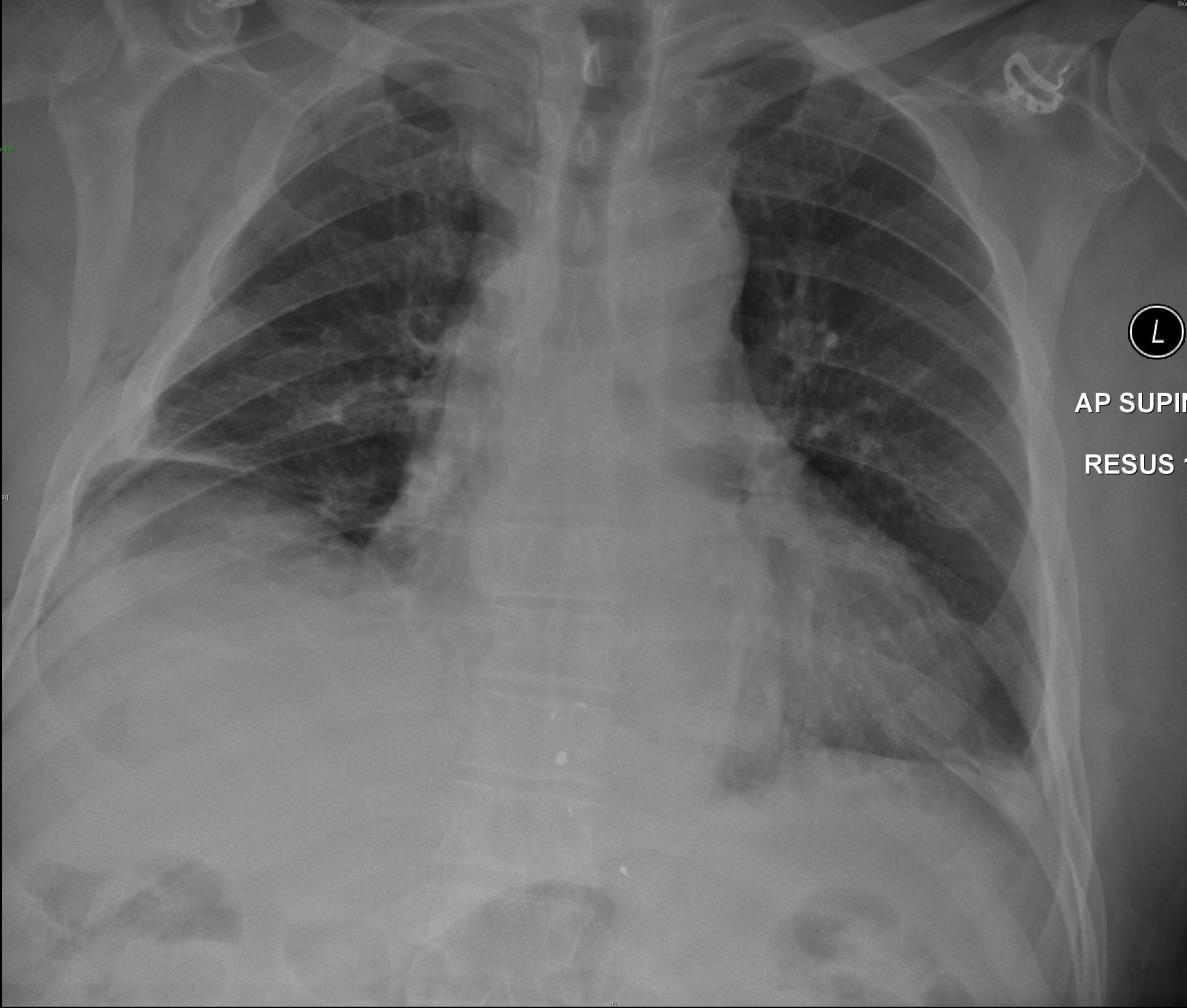
Question 27
83 yo female presented with dyspnoea, wheeze, and right sided crackles. What does her CXR show?
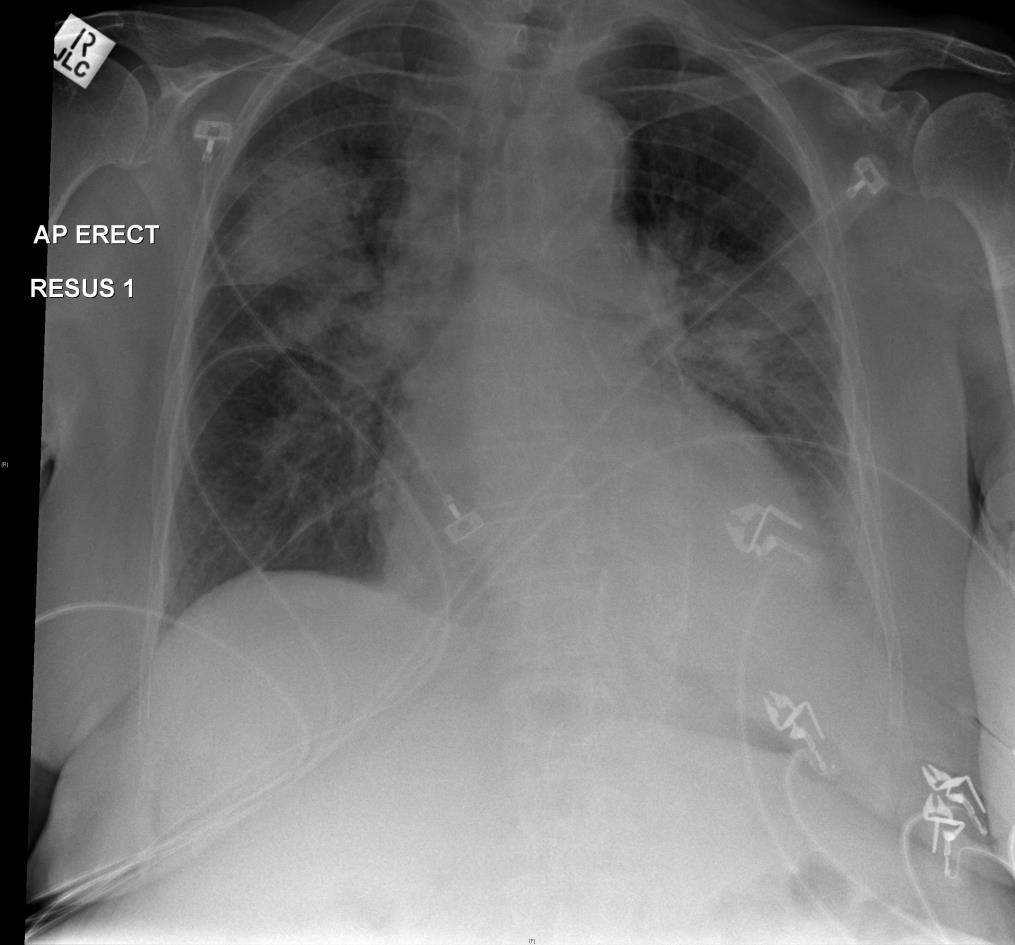
Question 28
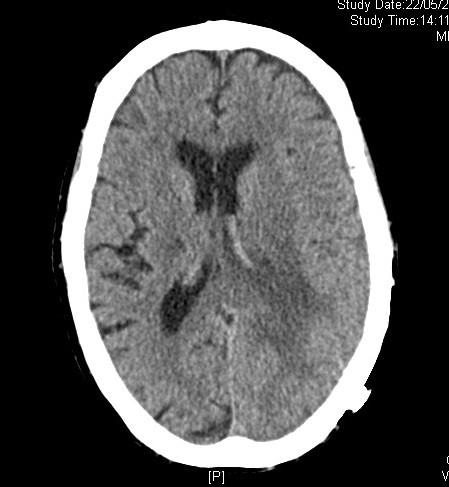
91 yo female presents with delirium and visual hallucinations. GCS 13/15 yesterday, now 9/15. Known atypical meningioma. What does this CT slice show?
Question 29
67 yo male presented with decreased conscious state, tachypnoea, and saturations of 70% RA. What does the CXR show?
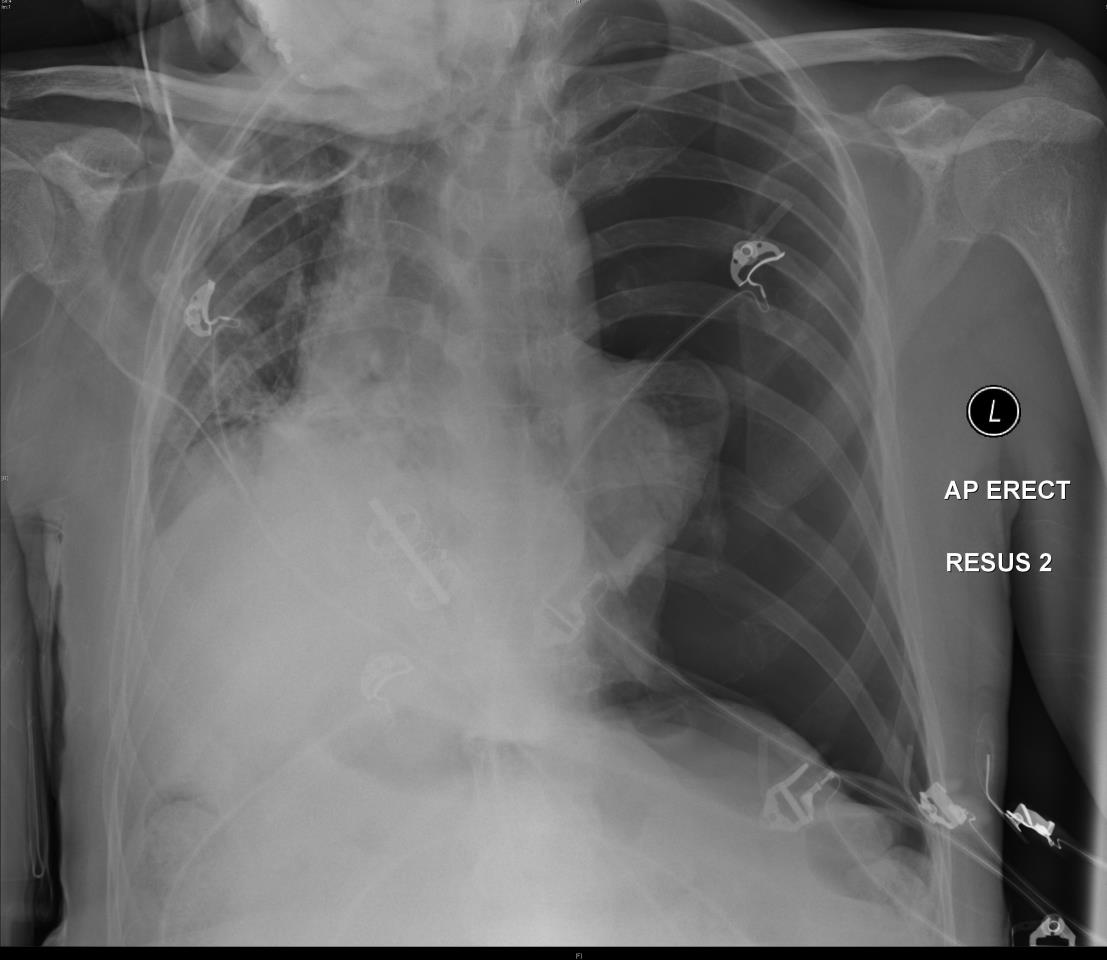
What blood tests will you order, and why?
Question 30
85 yo female presented after unwitnessed fall. Complaining of pain left lower leg. Unable to weight bear. Large laceration over left tibial area. What does XR show?
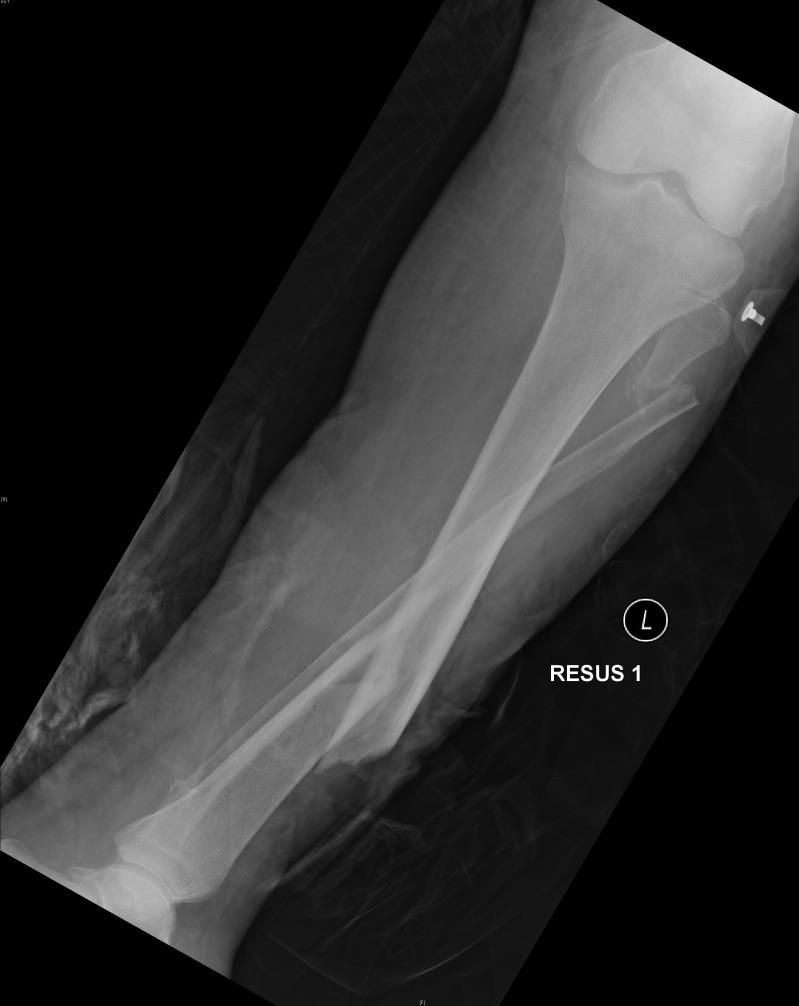
What are the priorities of management?
Question 31
91 yo male presented with SOB. Recent # NOF, now complaining of non-pleuritic pain over right ACJ. What are the abnormalities on this xray?
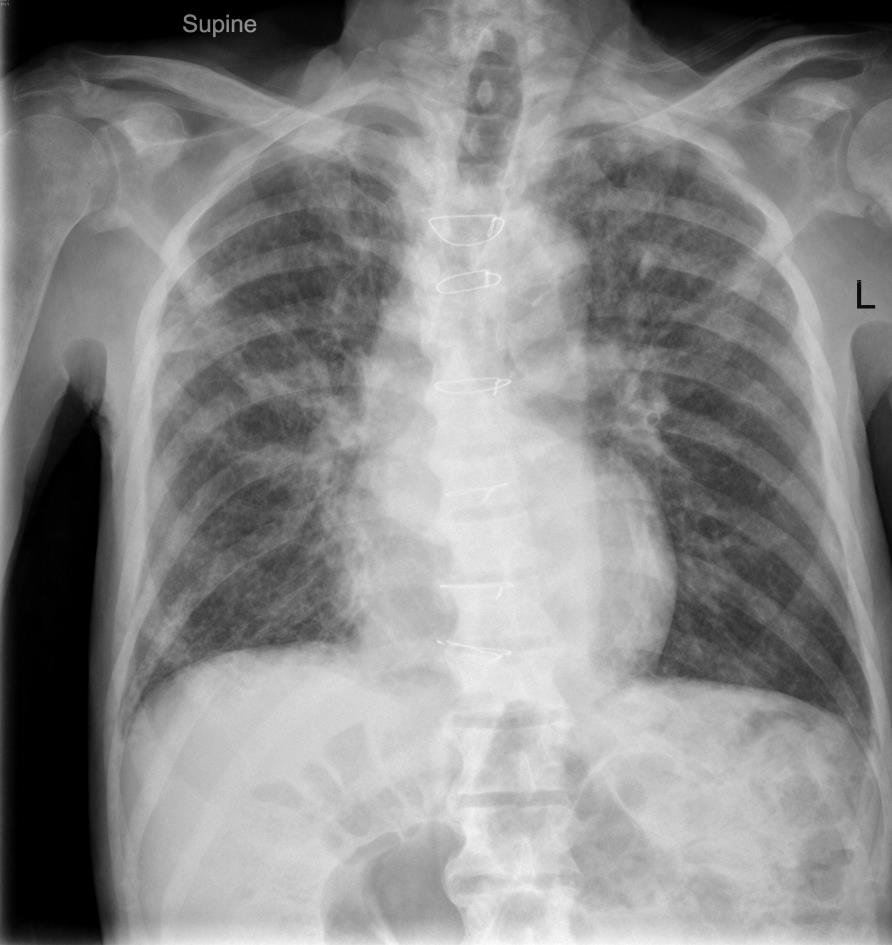
Blood tests showed the following:
Hb 93
WCC 6.1
Plat 207
EUC normal
LFT:
Bili 12
GGT 106
ALP 495
ALT 30
AST 51
What do these blood tests exclude or suggest as a cause of the abnormalities on the CXR?

