SAQ 1
An RMO asks you about cervical spine X ray and when to order one.
- List five indications for a C-spine x ray in a trauma patient. (5 marks)
- What three views constitute a C spine series X ray? (3 marks)
- Name the four lines on the lateral film that are assessed to exclude/confirm fracture. (4 marks)
SAQ 2
A 10 year-old boy is brought to ED by his parents after falling off his skateboard at a skate park and hitting his head.
- What clinical features would influence your decision to order a CT for this patient? (5 marks)
- Name two clinical criteria that may be used to guide your decision to CT this patient and give an advantage OR disadvantage for each. (4 marks)
- After assessment and observation, he is judged safe for discharge. Outline your discharge advice to his parents. (3 marks)
SAQ 3
A 7 year-old female is BIBA after a moderate speed MVA. She complains of a sore neck and tingling in her hands. She is currently lying on a stretcher crying, distressed, hyperventilating, with no C-spine immobilisation. Her uninjured mother has come with her in the ambulance.
- Give three options for protecting her C-spine pending further assessment. (3 marks)
- You decide to use ketamine for sedation to minimise movement in this child. Give the dose and route of ketamine you will use, and one advantage AND disadvantage of ketamine in this clinical scenario. (6 marks)
- For each of the following methods of immobilisation, circle whether each is recommended/not recommended under current paediatric C-spine guidelines. (3 marks)
| Sandbags | Recommended | Not recommended |
| Taping of head to spinal board | Recommended | Not recommended |
| C-spine hard collar | Recommended | Not recommended |
SAQ 4
A 42-year-old male is BIBA after a high speed MVA in which he was a restrained driver struck at 110kph by another car; the passenger in his car died on scene. He complains of neck pain and has had a C-spine collar placed by SAAS. A CT is ordered (image).
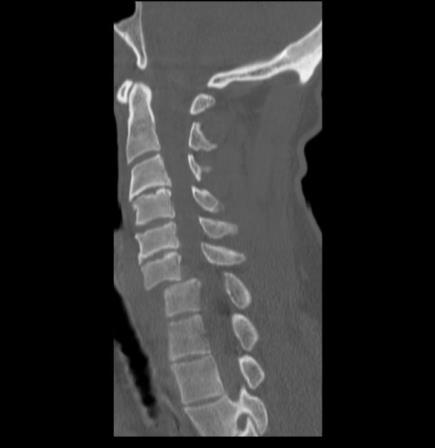
- Describe the main abnormality on the CT. (2 marks)
- List three clinical findings you would expect from this injury. (3 marks)
- Briefly describe the difference between neurogenic shock and spinal shock. (2 marks)
- You note that a trauma call was not initiated by SAAS prior to arrival, and decide to activate one in ED. Regarding trauma calls:
- Give five indications for a trauma call based on history from the scene of the accident.
- State an advantage and disadvantage of initiating a trauma call.
- What is the role of high-dose steroids in this patient? (2 marks)
SAQ 5
A 58 year-old male presents complaining of neck pain and being unable to lift his arms after a white water rafting incident. At triage, he is placed on a bed and a collar applied. He is haemodynamically stable, GCS 15, and has bilateral arm weakness.
- State the criteria you will use to determine whether this patient requires imaging of his cervical spine, and the name of the guideline where appropriate.
- A CT of his C spine is ordered and the following result obtained. State the abnormality on the scan and the likely cause of his symptoms.
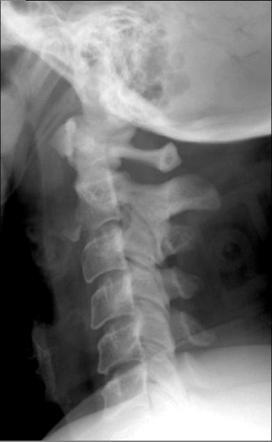
- The neurosurgery registrar is contacted and asks you to order extension/flexion films before he will review the patient. What is your response to this request?
SAQ 6
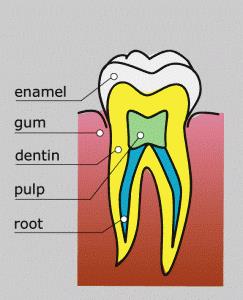
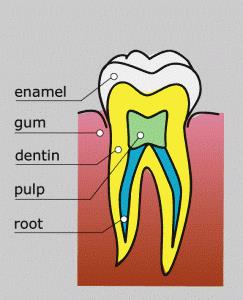
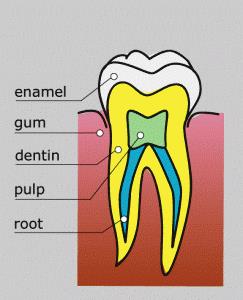
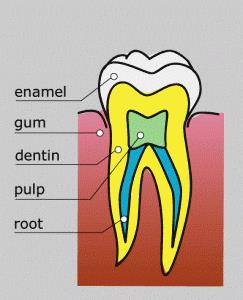
- Regarding the Ellis classification of dental fractures, draw a line on each of the following teeth to indicate the location of the fracture for each Ellis type.
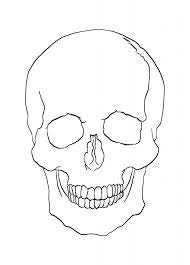
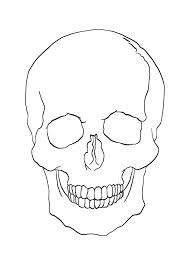
- Regarding the Le Fort classification of facial fractures, draw a line/lines on the following skull diagrams to indicate where the fracture(s) is/are.
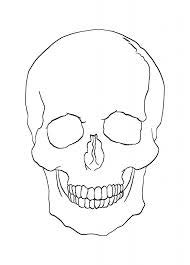
SAQ 7
A 78 year-old man is brought in by Medstar after being retrieved from Norton Summit, where he had fallen down a 10 metre cliff whilst hiking. He suffered no LOC at the scene, but required a fluid bolus en route for persistent hypotension. His GCS post-resuscitation with fluid is 10 (EVM 3-3-4) and he is agitated and confused. On arrival, his BP is 90/60, HR 110, T 36°, Sats 94% 2L O2. FAST scan shows no other injury. His wife has arrived and asks about his prognosis.
- List four factors which indicate a poor prognosis in any patient with a head injury. (4 marks)
- Define your endpoints for this patient in the following parameters. (6 marks)
| Temperature | |
| Oxygen saturation | |
| CO2 level | |
| BGL | |
| Posture/positioning | |
| BP or MAP |
- Define the difference between primary and secondary head injury, and state the neurochemical responsible for secondary injury. (3 marks)
- Will you administer prophylactic anticonvulsants to this patient? Justify your answer. (2 marks)

