SAQ 1
A 52 year old male has been referred to you by his GP with recent development of macroscopic haematuria.
- Give four differential diagnoses for this man’s haematuria and a cardinal sign/symptom for each
- Renal colic, bladder cancer, cystitis/UTI, prostatis, renal cancer, prostate cancer, urethral stricture, pyelonephritis.
- List four investigations you will order and justify them.
- Urine MCS – casts/cytology, rule out infection
- CTKUB – exclude renal stones
- Bloods – FBE/EUC/CRP – exclude.include infection
- Renal ultrasound – hydronephrosis, CT better.
SAQ 2
A 3 year old boy is brought to ED by his parents with genital pain. For each of the following conditions, give a description of the problem and a management option. Include doses where appropriate.
- Phimosis
- Inability to retract foreskin. Circumcision, steroid creams, gentle retraction.
- Paraphimosis
- Inability to return foreskin to normal position. Sugar, salt, ice, sustained pressure, surgery.
- Balanitis
- Infection of meatus. Antibiotics – Flucloxacillin 25-50mg/kg po qid.
SAQ 3
A 32 year old male presents to ED with a prolonged, painful erection.
- Give 6 causes of acute priapism
- Overdose sildenafil, leukaemia, sickle cell, spinal cord disorders, G6PD deficiency, tumour, medication side effect (antipsychotics, antihypertensive drugs).
- Divide into low flow (ischaemic) or high flow (rarer).
- List three complications of untreated priapism
- Gangrene
- Fibrosis
- Impotence
- Give four management options for priapism in ED, with doses and route of administration where appropriate.Outline in order, the four steps you would take to manage his compartment syndrome in ED.
- Aspiration with ABG (also diagnostic)
- Terbutaline 0.5mg IM or 5 mg PO
- Phenylephrine 200-500mcg intracavernosal
- Penile block for analgesia
SAQ 4
A 16 year old presents with swelling around the left eye. The patient is febrile and confused.
- List four findings on examination that would suggest orbital cellulitis.
- Pain on EOM, proptosis, visual acuity decrease, chemosis, RAPD, periorbital swelling, fever/systemic illness
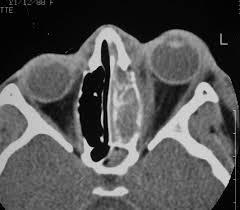
- The patient is diagnosed as likely orbital cellulitis. The following CT is obtained. List four findings on this CT that suggest orbital cellulitis.
- Sinusitis (source),intraconal/extraconal soft tissue mass, oedema of EOMs, intraorbital abscess, retrobulbar fat stranding, swelling of optic nerve, proptosis, periosteal abscess
- Give two causative organisms for this condition and the antibiotics indicated for treatment of this condition.
- Staph and Strep. Usually sinus source, dental otherwise. Flucloxacillin 2g and ceftriaxone 2g. Metronidazole if consider dental source.
- List two specialities you will consult regarding this patient and justify.
- ENT – likely sinus source
- Neurosurgery – likely meningitis, need to exclude abscess etc
- Paeds – will need admission
SAQ 5
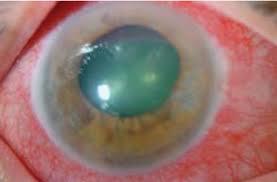
A 63 yo female presents with acute pain in her left eye. She was at the Fringe watching a show when she had sudden onset of decreased vision and severe pain in her eye. She complains of a headache and nausea. Her eye is shown below:
- What are the risk factors for this condition?
- Asian, older, longsighted, mydriatic medications, anticholinergics, FMHx, female.
- List four findings on examination that would suggest this condition.
- Dilated non-reacting pupil, dusky cornea, raised IOP (normal 10-20mmHg), decreased vision, severe pain
- List four medications you will give in ED for this condition and briefly describe the mechanism of action of each. Give doses.
- Analgesia/antiemetic – reduce pain/SNS/reduce risk of vomiting (raises IOP)
- Acetazolamide 500mg IV – reduces aqueous humour production
- Timolol 0.5% BE every 15-30 mins – reduces aqueous humour production
- Pilocarpine 2% drops every 5 minutes – to constrict pupil to increase outflow of humour
- Mannitol – 1g/kg – decreased vitreous humour production

