SAQ 1
An 18 year old female is brought in by ambulance 45 minutes after ingestion of an unknown amount of diltiazem SR, atenolol tablets, and alcohol. She is drowsy but responsive, with BP 85/30, HR 55, RR 12, Sats 99% RA. She is triaged to a resuscitation area.
- List three clinical features of severe toxicity in this ingestion. (3 marks)
- State 5 specific treatments/antidotes you will administer with doses and endpoints where appropriate. (5 marks)
- State four other management options you will initiate and justify each. (4 marks)
- List two consults you will request for this patient and justify each. (2 marks)
SAQ 2
A 42 year old factory worker is brought in by ambulance after a petrochemical spill at his work. Hazchem has identified the substance as carbamate. The patient was doused with the substance after a container tipped over. He is complaining of feeling nauseous and lightheaded.
- State two management steps that must be undertaken immediately on patient arrival. (2 marks)
- Briefly describe the toxic mechanism of action of carbamate and list five clinical symptoms that may result from exposure. (6 marks)
- What three specific treatment may be given to this patient? Include endpoints where appropriate. (3 marks)
- What is ageing and how does it affect organophosphate management? (2 marks)
SAQ 3
A 38 year old female presents after ingesting a large amount of Panadol. She took 20 x 500mg tablets the day before, and a further 20 x 500mg tablets 2 hours prior to presenting.
- List 5 factors you will include in your risk assessment of the patient. (5 marks)
- List six blood tests you will order and justify each. (6 marks)
- When should a Panadol level be taken in this patient? Justify your answer. (2 marks)
- State the level of Panadol ingestion (mg/kg) for each level of toxicity in supratherapeutic, staggered overdoses. (3 marks)
Non-toxic
Potentially toxic
Toxic - The patient returns an INR of 1.8 and an AST of 500. Briefly outline your NAC regime for this patient with two appropriate endpoints. (5 marks)
- State the most common side effect of NAC and the treatment required. (1 mark)
SAQ 4
A 52 year old male is brought in by ambulance after being found unconscious in his flat with a suicide note next to him. No evidence of trauma and no empty medication packets are found. He is intubated on scene. Naloxone was given en route with no effect.
On arrival, his obs are: HR 50, BP 110/70, RR 16, Sats 99% RA. His ECG is shown below, as is a venous gas.
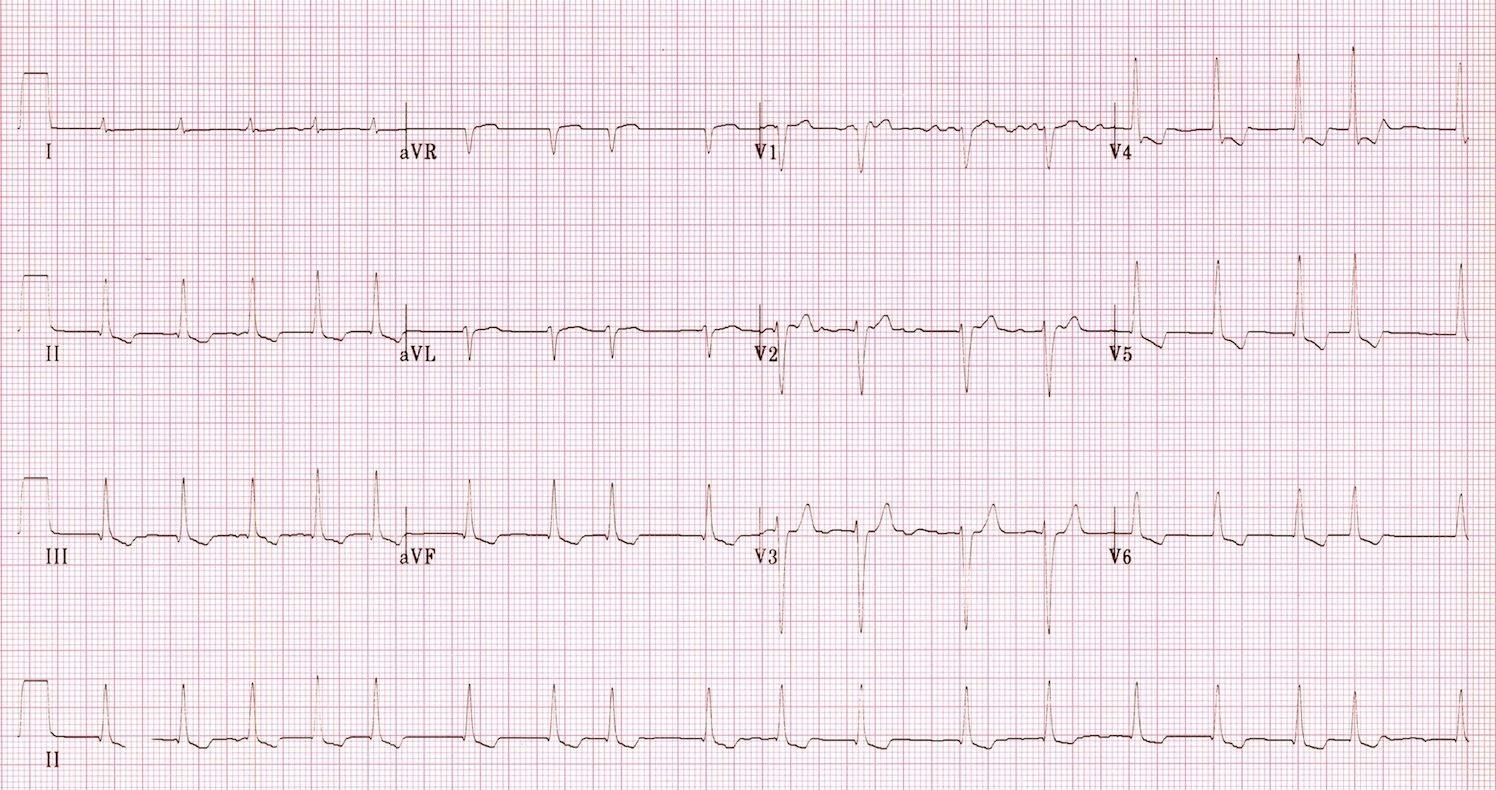
Venous gas: Na 128 K 7.5 Cl 110 Urea 17 Creat 80 HCO3 24
- List 6 management steps for this patient, including doses where appropriate. (6 marks)
- For a patient with this specific overdose, state three indications for administration of the antidote. (3 marks)
- Two hours after giving the antidote, the laboratory calls to advise you that the level of the toxin remains elevated. Does this change your management? Explain. (2 marks)
** bonus marks: describe the mechanism causing hyperkalaemia in this toxidrome.
SAQ 5
A 30 year old female is BIBA after an overdose of Panadol, fluoxetine, phenylzine, and amitriptyline. Her BP is 90/60, HR 120, T 38.8, and she has muscle rigidity. Her level of consciousness is fluctuating.
- Briefly describe the difference between decontamination and elimination in acute poisoning, giving two examples of each method. (4 marks)
- Regarding activated charcoal, list four toxins that may be adsorbed by charcoal, and four toxins/substance groups that charcoal is ineffective against. (4 marks)
Charcoal effective for:
Charcoal ineffective for: - For each of the medications taken, state a treatment option or antidote. Doses are not required. (4 marks)
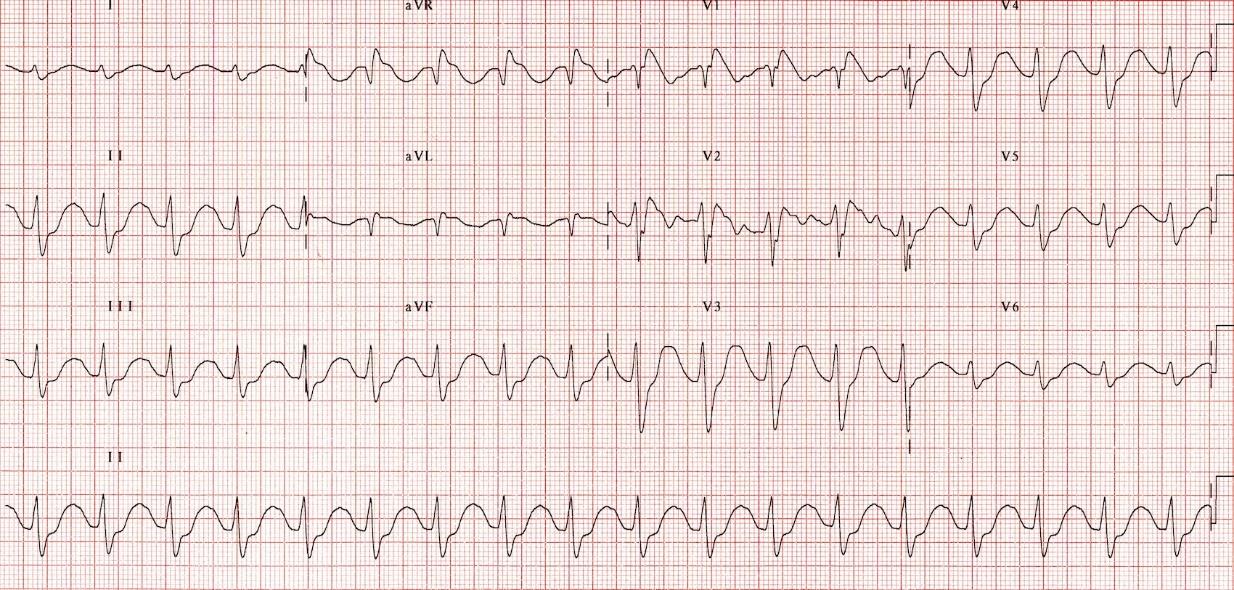
- Soon after arrival, her blood pressure drops to 80/40. She is intubated and an ECG recorded (shown). State which medication is likely to be responsible for her deterioration, and list four management steps with doses and endpoints where appropriate. (5 marks)
SAQ 6
A 24 year old metalworker presents with confusion and two seizures after dermal exposure to a chemical at his work. He has no past history of note and does not use illicit drugs. His workmates state he was found collapsed; they removed his outer clothing and applied copious amounts of water to his skin. You notice his pupils are dilated. His blood gas is shown below.
| VBG: | pH 6.98 |
| CO2 30 | |
| O2 75 | |
| HCO3 7 | |
| Lactate 12 | |
| Na 138 | |
| K 5 | |
| Cl 99 |
- Describe the four abnormalities on the blood gas and give a likely diagnosis. (5 marks)
- What is the mechanism of toxicity in this agent? (1 mark)
- List three antidotes that may be given for this toxin. Doses are desirable but not essential. (3 marks)Her blood tests return a CK of 20,500. Briefly describe your disposition of this patient and justify. (2 marks)
SAQ 7
Complete the following table regarding toxins that have been the focus of questions in past exam papers. (10 marks)
| Toxin | Toxic effect | Treatment option(s) |
| Quinine | ||
| Gliclazide/sulfonyurea | ||
| Lithium | ||
| Iron | ||
| Local anaesthetic | ||
| Hydrocarbons | ||
| Eucalyptus oil | ||
| Oil of wintergreen* | ||
| Chlorine gas | ||
| Hydrofluoric acid |
*also known as salicylic acid, if that helps!
SAQ 8
- List 6 medications which, if ingested, may be fatal in children (i.e. one pill can kill). (8 marks)
- What is the significance of vin de rose urine in the treatment of iron toxicity? (2 marks)
Approach to altered mental status
- Toxic ingestion
- Hypoglycaemia
- Opioid/sedative – hypothermia, CNS/resp depression
- Sympathomimetic – fever, HTN, tachycardia, seizures
- Cholinergic toxidrome – SLUDGE, diaphoresis, seizures
- Anticholinergic toxidrome – mad as a hatter etc, hyperpnoea
- AMI
- Hypoxia
Steps:
- Check Sats/ABG for O2
- Check BGL
- Check ECG – AMI, toxins
- Then follow list:
- CNS – stroke etc
- Toxins – alcohol etc
- Metabolic – glu, Ca, Na, Urea
- Infections – meningitis, UTI
- CVS – MI
- Pulmonary – APO, pneumonia
- Shock – hypovolaemia, cardiogenic, septic

